
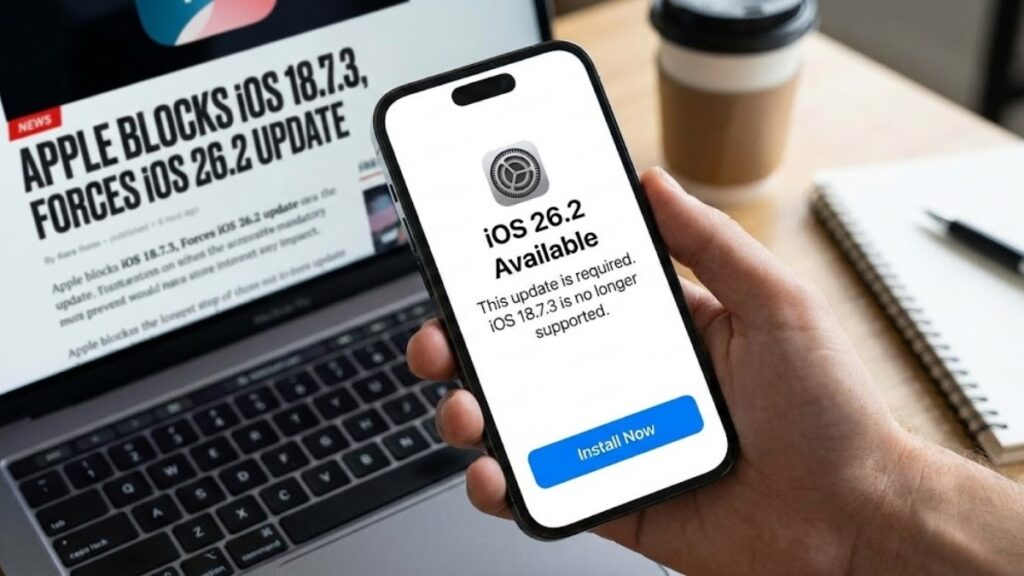
Apple has changed how it delivers software updates for many iPhone users. People with iPhones from the iPhone 11 and newer are now being shown only the iOS 26.2 update. The earlier update called iOS 18.7.3 is no longer offered on these devices. This has caused confusion and discussion among users around the world.
The change came shortly after Apple released iOS 26.2 and iOS 18.7.3 in December 2025. Normally, Apple lets some users stay on an older version of iOS by giving them only security updates without pushing them to install a major new system. This has been the typical approach for years.
However, that has changed now. iPhone users who can run iOS 26 and are still on iOS 18 are no longer seeing iOS 18.7.3 as an update choice in their software settings. Instead, the only available update shown is iOS 26.2. This means users who want security fixes must move up to the newer release.
What This Means for Users
The new policy affects iPhones from the iPhone 11 up through the latest iPhone 16 models. These devices can run Apple’s newest operating system, so Apple now only offers iOS 26.2 as an option. Users who stay on iOS 18 can no longer receive the iOS 18.7.3 security update directly. Because of this, many users feel Apple is forcing the update rather than giving a choice.
Security experts highlight that iOS 26.2 includes urgent security patches that fix serious problems, including weaknesses in Apple’s WebKit browser engine. These flaws could allow attackers to take control or steal data. Because of these risks, Apple is urging users to update.
Some users have reported that iOS 18.7.3 was briefly visible through beta settings earlier, but the option has since disappeared for many. This reinforces the sense that Apple wants users to move to the new system quickly.
Why Apple Changed the Update Policy
Apple has a long-standing practice of offering two update paths for iPhone users after a major iOS release. One path shows the latest full new operating system version, like iOS 26. Another path lets users remain on the older current version, like iOS 18, while still receiving security updates. Many users have appreciated this choice, especially if they prefer a familiar or lighter system.
This choice became common starting with iOS 15 and continued through iOS 18. Users could choose to stay on iOS 18 for a time and still get important bug and security fixes. But Apple always made it clear that the option would not last forever and that transition to the new version would come eventually.
In recent weeks, Apple appears to have taken a stronger step by limiting the older option for devices that support iOS 26. For users on older devices that cannot run iOS 26, Apple can still offer iOS 18 updates. But for newer devices, the older release path has been narrowed or removed.
Apple’s official software references show that iOS 18.7.3 includes important security fixes. But Apple’s support pages have also changed the list of devices for which iOS 18.7.3 will appear, highlighting that iPhones capable of running iOS 26 may no longer see the update. This supports the view that the company is guiding users toward the latest major system.
What Is iOS 26.2 and Why It Matters
iOS 26.2 is the latest major iPhone operating system update. It includes technical improvements as well as important security fixes. It also adds new features and updates to system functions like reminders, AirDrop, and translation tools. It is part of Apple’s ongoing effort to bring all its devices, including iPads and Macs, under a unified generation number for 2025 and 2026.
The update targets flaws that were being actively exploited by hackers. Some security experts have warned that older versions of iOS face real risks if not patched. For example, WebKit vulnerabilities could allow malicious code to run if a user opens a dangerous web link. This makes staying updated more than just a matter of convenience.
By offering only iOS 26.2, Apple ensures that users on compatible devices receive these necessary patches. But many users see this as a forced upgrade because it removes choice. Users who preferred to remain on iOS 18 for reasons like battery life or interface familiarity now feel they must upgrade.
Reactions from Users
Reports from online communities show that many iPhone owners are unhappy with the change. Some users say they simply want to stay on iOS 18 and avoid the newer design, which includes interface changes and other major shifts. They do not want to adopt the new system quickly, especially if it has bugs or performance issues.
Some people reported that after December updates, their devices stopped showing any iOS 18 updates in the Software Update screen. The only visible update was iOS 26.2. This has frustrated users who were fine with iOS 18 and did not want to upgrade yet.
In some cases, users have tried creative workarounds, like enrolling in beta update programs to make iOS 18.7.3 appear. But these methods may not work for everyone, and Apple may close these loopholes over time.
Some users also express concern that iOS 26 has battery and performance issues on older hardware. They prefer iOS 18 because it runs smoothly on their devices. But with the older updates blocked, they feel they have no choice but to move to the new version to stay secure.
Analysts’ Views
Technology analysts say this move is part of Apple’s long-term strategy to encourage adoption of its latest software. Apple usually wants most of its user base on the most recent OS to simplify development and support. Newer systems also let Apple introduce new features and security measures faster.
Apple’s practice of stopping updates for old versions is not new. It has removed update options for older iOS versions in past years. However, this year the shift feels sharper because users expected that Apple would offer iOS 18.7.3 as a security patch without forcing the major update.
Some commentators note that many users were surprised because Apple released iOS 18.7.3 at the same time as iOS 26.2. But later Apple removed it from devices that could run the later system. This has made users wonder whether the removal was intentional or a technical issue.
What Users Should Do
For iPhone owners who care about security, updating to iOS 26.2 is recommended. It fixes known flaws that could be exploited by attackers. Apple’s own security notices show that iOS 26.2 includes several important compatibility fixes for iPhones from iPhone 11 onward.
Users should go to the Settings app on their iPhone, select Software Update, and then install iOS 26.2 if it appears. They should back up their device before updating. Backups protect personal data if anything goes wrong during the update process.
For people who strongly prefer older versions, there may still be ways to stay on iOS 18 temporarily. But these options are limited and may require joining beta programs. Apple’s official support documents suggest that over time older versions will be dropped entirely for devices that support newer software.
Looking Ahead
Many iPhone users and tech watchers will be watching Apple’s next steps closely. Apple is already working on iOS 26.3, which is expected to bring additional features and improvements. That update is currently in beta testing and may roll out in early 2026.
Apple’s approach to updates is likely to continue evolving. In future years, Apple may again offer dual update paths for some systems, or it may choose to limit older options more quickly as the gap between versions grows.
For now, the shift to iOS 26.2 as the only update choice on newer devices marks a turning point. It shows how Apple balances security needs with user choice, and how it may prioritize the latest software to protect its large global user base.