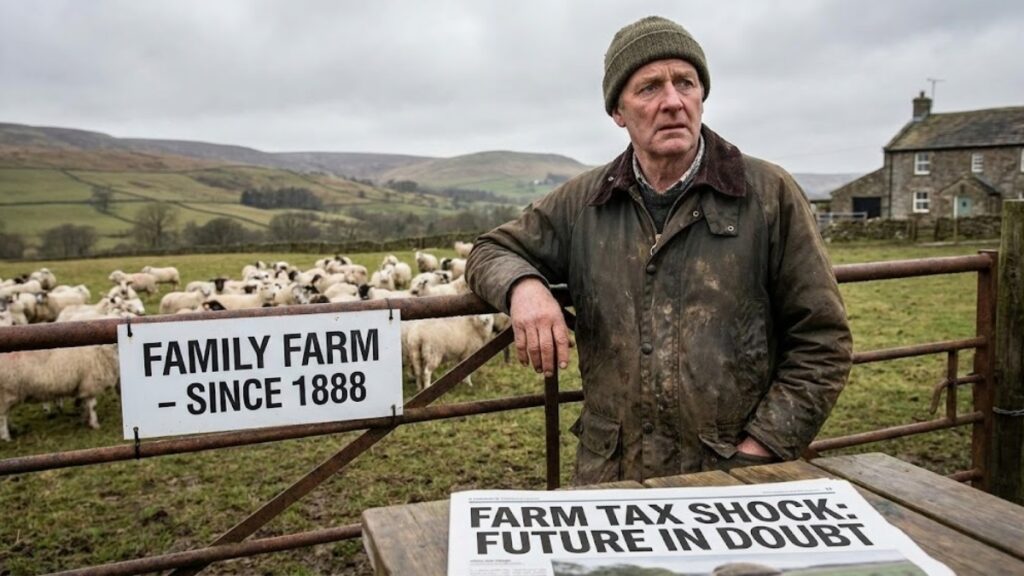
London, UK – December 23, 2025 – Farmers across the United Kingdom are facing growing anxiety about their future as major changes in tax policy and economic pressures put traditional family farming under strain. A government-commissioned review has found that many farmers are “bewildered and frightened” about what lies ahead, raising questions about the long-term health of British agriculture.
The fears centre on a set of proposed reforms to inheritance tax and other farming support systems that could come into force in April 2026. These changes would mean that family farms with agricultural assets worth more than £1 million would face a 20 percent inheritance tax, a measure that ends decades of tax exemptions designed to protect farms passed between generations.
Review Finds Deep Concern Among Farmers
The review, led by Baroness Minette Batters, former president of the National Farmers’ Union (NFU), was commissioned by the UK government to assess the broader state of farming. It found that nearly one-third of farms were operating at a loss, food production was no longer reliably profitable for many, and rising costs in energy, machinery, wages, and inputs were adding to pressure on rural businesses.
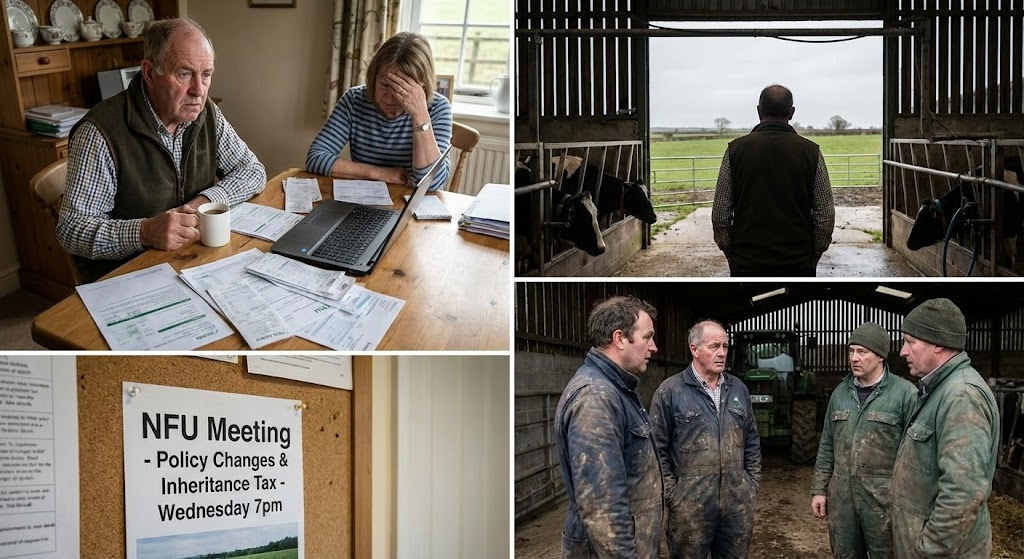
Farmers told researchers they felt uncertain and worried for the future of their livelihoods and family estates. Although the inheritance tax changes were not directly analysed in the review’s mandate, they emerged as the biggest concern among farming communities and industry leaders.
Why Taxes Matter So Much to Farmers
In the UK, many farm businesses are asset-rich but cash-poor. That means they own land which is valuable on paper, but their day-to-day incomes may be low or unpredictable. With inheritance tax set to hit estates worth over £1 million, some farmers worry they would have to sell land or assets to pay the bill when passing the farm to their children.
Supporters of the tax change, including government officials, say the reform is partly meant to address abuses of the previous inheritance exemption. Wealthy individuals had been buying agricultural land as an investment to avoid other taxes. The government argues that tightening tax rules will make the system fairer and generate revenue for public services.
Political Tensions and Protests
The inheritance tax issue has not only affected farmers’ finances, it has stirred political debate and large protests. Since late 2024, farmer organisations and unions have held demonstrations in London and across the UK, sometimes bringing tractors and machinery into public spaces to dramatise their message. Many farmers say they feel their deep connection to the land and food security is being overlooked.
Public figures and commentators have joined the conversation. Television presenter Jeremy Clarkson, who also runs a farm, criticised the tax changes as a “hammer blow” to British agriculture, while opposition politicians have pledged to reverse the reforms if they return to power.
Government Response and Industry Calls for Support
In response to the report and protests, the government announced plans to set up a Farming and Food Partnership Board, a new advisory body meant to involve farmers more closely in policy planning and support. Officials say this board will help improve access to finance, build fairer supply chains, and strengthen domestic food production.
However, farmers and industry leaders say that more direct action is needed. They want targeted tax relief, easier access to credit, and incentives that recognise the unique challenges of agriculture, especially under climate change and market pressures.
Shifting Challenges Beyond Tax
Tax policy is only part of what British farmers are grappling with. Rising labour costs, inflation, and supply chain disruption have eaten into farm profits. Some farmers are also facing new animal welfare rules that may raise production costs unless similar standards are enforced on imported products.
Many farmers say that global competition and climate risk have already made agriculture a high-risk, low-reward business. Supporters of reform argue that modern agriculture must adapt with mechanisation, new crops, or value-added production to stay competitive. But critics counter that without a stable policy environment and financial buffers, change is too difficult for small and medium family farms.
My Perspective: Fragile Balance Between Policy and Livelihoods
This situation in the UK illustrates a larger challenge that many countries face: balancing fair tax policy and sustainable rural livelihoods. On one side, governments must find ways to fund public services and prevent tax avoidance. On the other, agriculture is not like many other industries. It is deeply tied to food security, land stewardship, and long time horizons that do not easily fit short-term tax cycles.
An effective policy should take into account not just the value of land on paper, but the actual economic reality of farming families. Many farms have high asset values because of the land itself, not because of high incomes. A future tax burden that cannot be met comfortably from regular farm income could force land sales, break up family farms, and weaken local rural economies.
Moreover, as climate events grow more common, farming risk increases. Farmers already face unpredictable weather, potential crop losses, and rising costs for water and energy. Without realistic support and tax provisions that reflect these realities, rural communities may lose their capacity to feed the nation while maintaining traditional agrarian cultures.
Farmers provide a service that goes beyond pure economics: they safeguard food production, sustain rural populations, and often manage land in ways that protect nature and landscape heritage. Policies that deeply unsettle this balance risk unintended consequences that ripple beyond farming communities to affect food prices, supply stability, and national resilience.
Conclusion
British farmers’ fear for the future is rooted in real financial pressures and deep worry about the sustainability of family farming. The debate over inheritance tax and agricultural policy shows how crucial it is for governments to include those most affected in crafting solutions. With careful dialogue, balanced reform, and targeted support, it is possible to protect both public revenue needs and the lifeblood of agricultural communities.
—but if policymakers do not take farmers’ concerns seriously, the long-term viability of rural food systems could be at stake.