December 25, 2025 — Ranchi / Mumbai — What began as a jaw‑dropping cricketing performance by a teenage prodigy also turned into a broader debate about the state of Indian domestic cricket.
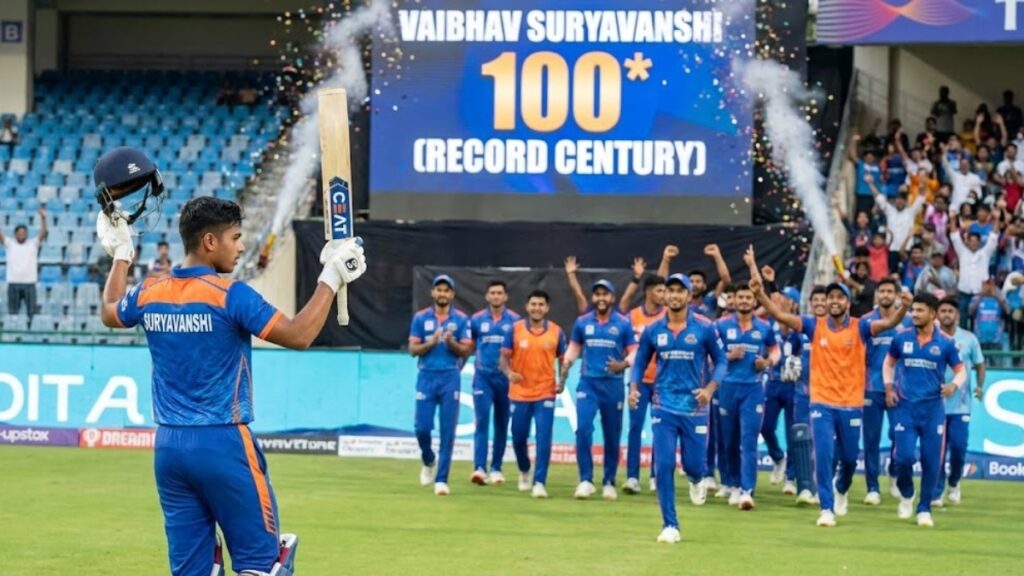
On Wednesday, December 24, 14‑year‑old Vaibhav Suryavanshi tore through the bowling attack of Arunachal Pradesh in the Vijay Hazare Trophy, smashing a sensational 190 off just 84 balls, including a 36‑ball century that temporarily stood among the fastest in List A history. His innings helped Bihar post a world‑record 574/6 in a 50‑over match, drawing widespread attention on social media and in cricketing circles.
While the incredible feat has been celebrated nationwide, many analysts and former players are also pointing to a deeper issue: the wide gulf in competitive balance across India’s domestic cricket landscape.
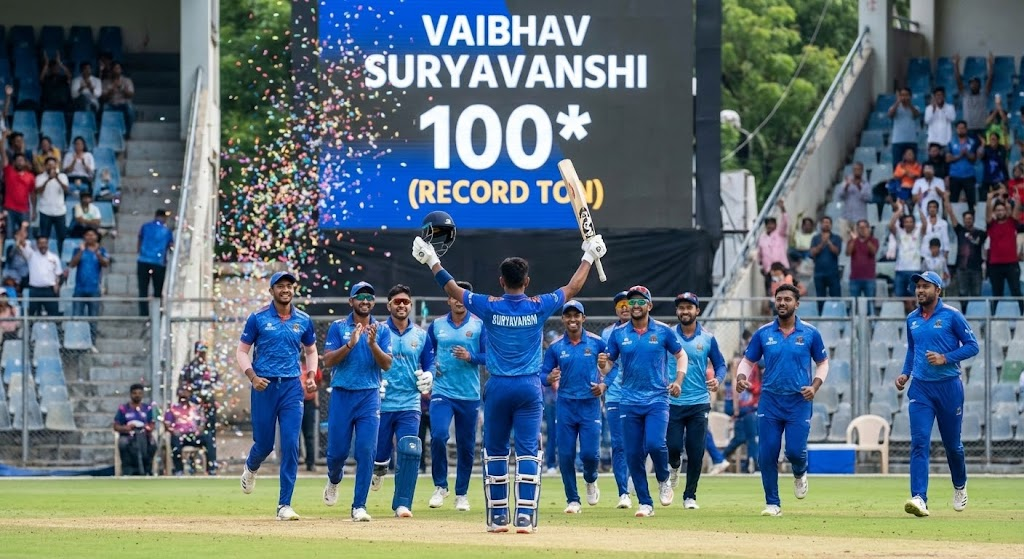
History and Headlines on Vaibhav Suryavanshi’s Record Ton
Suryavanshi’s innings was remarkable by any measure. At just 14, he became the youngest centurion in List A cricket and recorded one of the fastest hundreds and 150s in this format, eclipsing records once held by modern greats like AB de Villiers and Jos Buttler.
But despite the headlines celebrating the bat‑smashing heroics, observers are highlighting that such one‑sided performances are increasingly common in fixtures involving the newest additions to India’s domestic competitions — particularly teams from the northeastern states such as Arunachal Pradesh.
Competitive Disparity in Domestic Cricket
Since 2018, a Supreme Court‑appointed committee of administrators (CoA) granted First‑Class status to several northeastern state teams. While the move expanded the reach of cricket across India, it also paired established squads with deep talent pools and historic cricketing infrastructure against teams still building basic facilities and experience.
As a result, Vijay Hazare Trophy matches involving teams like Arunachal Pradesh frequently turn into lopsided affairs, with massive totals and record-breaking individual performances. In addition to Bihar’s new record team score, there were 22 centuries and multiple 300+ totals across the same day’s fixtures — data that underscores the competitive mismatch underpinning many domestic contests.
Former national selector Saba Karim told Times of India that while Suryavanshi’s talent is unquestionable, the system must offer him meaningful competition to ensure his long‑term growth. Karim argued that exposure to stronger opponents and conditions is vital for elite prospects.
Calls for Structural Reform
Several voices within the game are proposing changes to improve balance:
Parallel Top‑Class Pathways
Ex‑selector Devang Gandhi suggested the BCCI create a separate elite competition featuring top young talent alongside stronger opposition, instead of leaving rising stars to rack up big numbers only against fringe teams.
Centre of Excellence Involvement
WV Raman, former NCA coach, recommended that the BCCI’s Centre of Excellence (CoE) field its own team in certain domestic tournaments. That, he believes, would give emerging players consistent exposure to high‑quality cricket.
Investment in Northeastern Cricket
Critics argue that simply granting status isn’t enough. There is a need for better coaching infrastructure, grassroots pathways, and mentorship in the northeastern states, where match fees and resources have yet to translate into improved competitiveness.
Gandhi also pointed out that many teams in the newer groups still rely on a small number of outstation performers, rather than producing local talent, which slows overall development.
Beyond One Knock: The Bigger Picture
The broader implication of these debates is clear: while individual records can thrill fans and spotlight prodigious talents like Suryavanshi, the quality and balance of domestic competition are equally vital for nurturing future stars capable of thriving at the highest levels — including international cricket.
Former players emphasize that consistent high‑pressure environments — not lopsided matches — are where elite skills are refined. They warn that young batters accustomed to minimal challenge may develop habits that are hard to break when they eventually face world‑class bowling.
Fan Reactions and Social Media Buzz
Social media has been awash with admiration for Suryavanshi’s record‑breaking display, with cricket communities praising his fearless batting and precocious talent. On platforms like Reddit, fans celebrated the historic knock — but some also echoed the article’s concerns, questioning whether too many runs and too little challenge could hinder the development of other skills like temperament and technique under pressure.
Many users noted that such staggering totals, record scores, and frequent centuries often spark excitement but also raise conversations about the quality of bowling attacks and competitive contests.
Next Steps for Indian Cricket
The Board of Control for Cricket in India (BCCI) has acknowledged the need to accelerate development in regions where cricket is still emerging. Investment in coaching, match infrastructure and regular competitive fixtures is essential if northeastern and Plate Group teams are to close the gap with long‑established domestic sides.
Meanwhile, star performers like Suryavanshi will continue receiving attention not only for what they accomplish statistically but also for what their successes and the context around them reveal about the health and direction of the sport’s talent pathways in India.