

As India heads into the New Year, thousands of taxpayers received unexpected and terse emails from the Income Tax Department, warning of discrepancies in their income-tax filings — and for many, the festive spirit has been replaced with anxiety.
The unusual timing and blunt tone of these communications have led to confusion and concern among both salaried individuals and high-net-worth taxpayers, especially those who claimed large deductions, donations, or refunds in their returns.
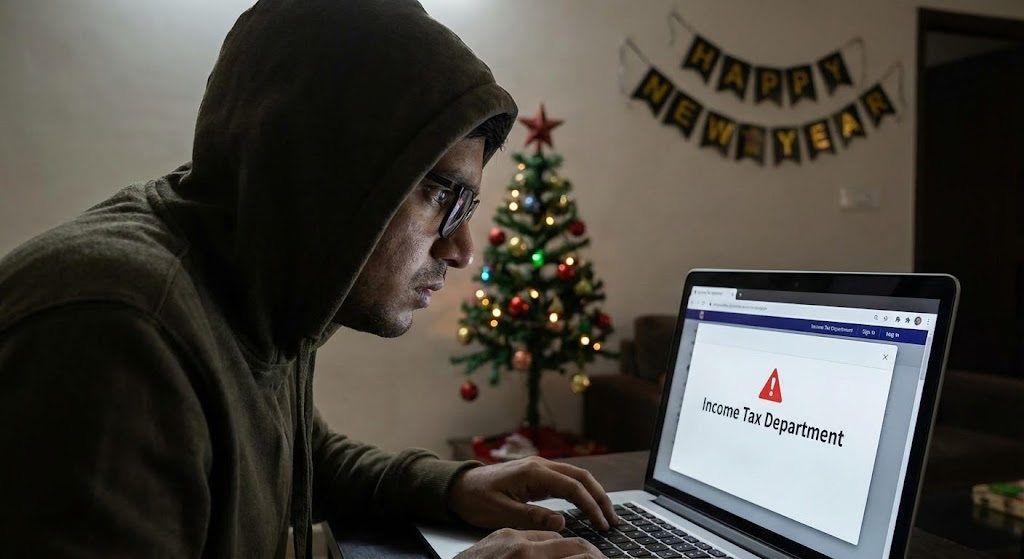
Automated Alerts Hit Inboxes Before Year End
In the last weeks of December 2025 — typically a time when many Indians unwind from the year’s work and look forward to celebrations — the tax department sent out a wave of what appeared to be “do not reply” alert emails to taxpayers.
These messages stated that processing of their I-T returns (ITRs) — and by extension, their refunds — had been “kept on hold” due to potential issues identified in the return data.
The most common triggers cited in these messages included:
- Donations to registered charities with claimed deductions that didn’t match the department’s records or where PANs were incomplete or not listed under Section 80G of the Income Tax Act.
- Claims of high refunds relative to reported salary figures, especially for salaried taxpayers whose deductions or benefits were not reflected in their Form 16.
- Reported capital gains, HRA (House Rent Allowance) amounts, leave travel allowance (LTA) claims, or other deductions that didn’t align neatly with automatic data sources like the Annual Information Statement (AIS) and Taxpayer Information Summary (TIS).
For many individuals receiving these alerts, the messages came without prior notice and days before the December 31 deadline for revising or rectifying ITRs — leaving taxpayers uncertain how to respond.
Automated Systems, Manual Anxiety
Tax practitioners told The Economic Times that while the initiative was ostensibly aimed at helping taxpayers voluntarily comply and avoid later scrutiny, the tone and timing of the emails have done more to alarm honest taxpayers than reassure them.
“They’re using phrases like ‘false claims’ and ‘refunds held,’” said Mohit Bang, partner at Hyderabad-based chartered accountants Trivedi & Bang, describing how even legitimate and well-documented returns have been flagged by automated systems. “A well-intended policy is overshadowed by poor communication.”
Automated verification tools compare data from multiple sources — AIS, Form 16, TIS, bank transaction reports, and trustee filings from charities — before flagging potential issues. But tax experts note that false positives are emerging, particularly when data points don’t sync perfectly due to reporting timelines or omitted employer declarations.
For instance, if a salaried employee did not provide all investment or deduction proofs to their employer before year-end, that information may not appear in Form 16 even if it was validly claimed in the ITR. The automated system might then interpret the return as mismatched.
Charity Deductions and the 80G Puzzle
One of the prominent areas triggering alerts relates to Section 80G donations. Under this provision, taxpayers can claim a deduction on donations to registered charities or certain non-profit organizations. Eligible deductions typically amount to either 50% or 100% of the donation, depending on the category and registration status of the donee.
However, taxpayers who donated to well-known foundations focusing on welfare, yoga, spirituality or education — and who believed they had complied with all eligibility requirements — were startled to see these claims questioned.
In some cases, the system flagged them due to mismatches in PANs, incorrectly listed donee registration numbers, or delays in the donee filing relevant forms such as Form 10BD and issuance of donor-wise certificates (Form 10BE).
While the law allows these charitable deductions, automated data reconciliation may not yet be fully seamless, resulting in confusion for donors. Tax experts suggest that sharper analytics and better pre-filing guidance could reduce such spurious flags.
High Refund Claims and Salary Mismatches
Another key issue flagged in the alerts was “high refund claims” relative to salary figures reported in Form 16. This especially affected salaried individuals, many of whom claim deductions for investments or expenses that they did not report to employers within the employer’s TDS (Tax Deducted at Source) framework.
Under Indian tax rules, taxpayers are permitted to claim legitimate deductions in their ITRs even if these weren’t factored into employer-generated Form 16, provided they can substantiate these with documentation. However, automatic systems currently treat such mismatches as possible anomalies unless explained.
Some examples include leaves travel allowance (LTA) that doesn’t match employer records, or house rent allowance (HRA) deductions without corresponding rent receipts filed by the employer. These legitimate differences can trigger alerts to the taxpayer.
Taxpayer Anxiety and Communication Criticism
The broader tax landscape in India has undergone several changes in recent years — including new income-tax regime tweaks, higher rebate thresholds, and simplified slabs introduced in Budget 2025 designed to help the middle class. These reforms aimed to reduce tax liabilities and improve compliance transparency.
Yet, as The Economic Times reports, the current wave of year-end automated alerts has created anxiety among taxpayers who see their tax refunds held without clear guidance. Some have questioned whether they should:
- Ignore the emails and wait for further instructions,
- Withdraw their claimed deductions and revise ITRs before year-end, or
- Consult tax professionals urgently to avoid complications.
Tax experts argue that communication style matters. Rather than a confrontational or accusatory wording, advisory messages should ideally be gentle reminders that encourage compliance without implying wrongdoing.
This sentiment is echoed by CA practitioners like Ashish Karundia, founder of Ashish Karundia & Co, who said that reaching out earlier in the filing cycle — instead of at the year’s end — would provide taxpayers more time to reconcile discrepancies and reduce panic.
Implications for Tax Refunds and Filing Strategy
A serious impact of these year-end tax alerts is the uncertainty around refund timelines. Many taxpayers now wonder how long they must wait before refunds are processed if their returns are flagged — even when they believe their filings are accurate.
Additionally, the timing — just before the December 31 deadline for revised returns — has put additional pressure on taxpayers to make quick decisions. Tax professionals recommend cautious documentation, timely responses through correct e-filing channels, and, where necessary, revised filings with clear annotations and supporting documents.
Importantly, these emails are not formal notices through the government’s official tax portal — they are “alerts” designed to prompt voluntary review and correction. But their wording, without adequate context, feels closer to a compliance penalty rather than an advisory.
Expert Views on Compliance Messaging
Industry observers say that India’s income-tax system is becoming increasingly data-driven, using tools such as AI, AIS, and TIS to detect anomalies and flag them automatically. While this trend can improve transparency and catch genuine fraud or misuse, it also risks over-flagging legitimate taxpayers due to imperfect data synchronisation.
A more proactive tax department strategy — such as earlier engagement during the assessment year, clearer guidance in plain language, and better help channels — could help reduce taxpayer frustration. Professionals also urge taxpayers to keep meticulous records for deductions, especially gifts and donations, which have specific documentation rules and caps.
What Taxpayers Should Do Now
With the fiscal year closing and ITR revision deadlines looming, taxpayers in India are advised to:
- Review their tax returns carefully, especially large deductions or refunds claimed.
- Check charity details and PAN info for donations claimed under Section 80G.
- Compare Form 16 and ITR claims to avoid mismatches.
- Seek professional help early rather than delaying until the deadline.
- Document investments and expenses clearly so that any queries can be answered with supporting records.
Experts also recommend keeping a close eye on any follow-up notices on the official income-tax portal or through tax filing systems rather than relying solely on automated emails.
Tax Rules Around Gifts and Seasonality
Although the article focuses on refund holds and flagged discrepancies, it comes at a time when taxpayers commonly exchange gifts and year-end bonuses — which themselves can have tax implications. Under the Indian Income Tax Act:
- Gifts from non-relatives exceeding ₹50,000 in a financial year are fully taxable as “Income from Other Sources.”
- Gifts from employers up to ₹5,000 are tax-free; anything above is typically taxable.
- Gifts from specified relatives are exempt regardless of amount.
This festive season tax awareness adds another layer to why some taxpayers feel the “taxman” has dampened celebrations. What might have been a joyous time of bonuses, travel, and gifts is now paired with complexities in compliance and refund uncertainty.
Looking Forward: Compliance and Confidence
As India’s tax system evolves — with simplification efforts like the proposed updated Income Tax Act or newer compliance frameworks — the next few years will likely involve continued automation, data reconciliation, and taxpayer education. However, the experience of late-December 2025 shows that communication strategy and timing matter greatly for public confidence.
Tax authorities should aim to balance strict compliance priorities with supportive messaging that helps honest taxpayers confidently fulfill their obligations without unnecessary anxiety — especially around holidays and cultural celebrations.
Summary
As the new year approaches, India’s Income Tax Department has sent blunt, automated emails flagging discrepancies in tax returns and holding up refunds — leading many to feel like the “taxman has turned New Year party pooper.”
The alerts focus mainly on donation and deduction mismatches but have unsettled taxpayers who believe their filings are accurate. Experts say better timing, clearer communication, and early engagement would ease anxiety.
Meanwhile, taxpayers are urged to review filings carefully and document all claims, including gifts and charitable donations, to ensure compliance and avoid unexpected delays in refunds.