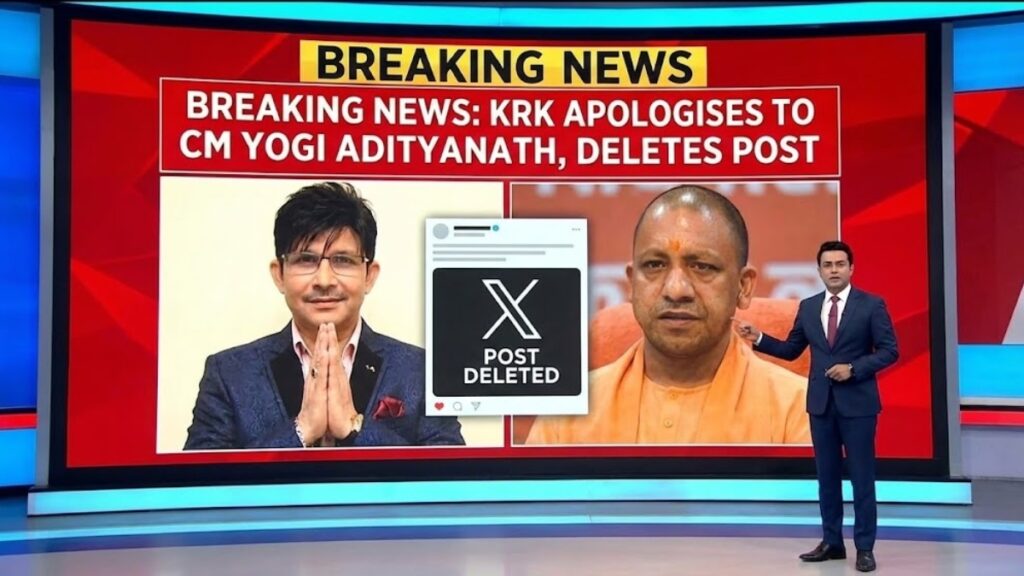
Bollywood personality and controversial commentator Kamaal R. Khan (better known as KRK) has retracted a social media post and issued a public apology to Uttar Pradesh Chief Minister Yogi Adityanath, drawing attention across political and entertainment circles.
The apology comes amid outrage triggered by KRK’s earlier comments — and highlights the growing impact of statements made by celebrities on social platforms in India’s highly charged socio-political environment.
KRK, known for his outspoken style on platforms like X (formerly Twitter), posted a message on his verified X account on January 1, 2026 retracting his earlier remarks and apologising directly to CM Adityanath. The move quickly became a trending topic, igniting discussion around freedom of speech, accountability, and political sensitivities in the digital age.
The Original Post and Backlash
Earlier this week, KRK posted a message on X that included critical language about Chief Minister Yogi Adityanath, whose leadership of Uttar Pradesh — India’s most populous state — has been both widely supported and hotly debated.
That earlier post sparked immediate backlash from BJP supporters, political commentators, and mass audiences who viewed it as disrespectful toward a sitting public office holder. Several users reported the post as offensive or inappropriate.
Within hours, the original tweet gained attention not just for the criticism itself but also for the sharp reactions it provoked, including calls for moderation of content involving public figures.
Political commentators and BJP affiliates accused KRK of inciting disrespect against an elected leader. That backlash included thousands of comments and mass sharing of screenshots — intensifying pressure on KRK to clarify his position.
KRK’s Apology: A Withdrawal and Mea Culpa
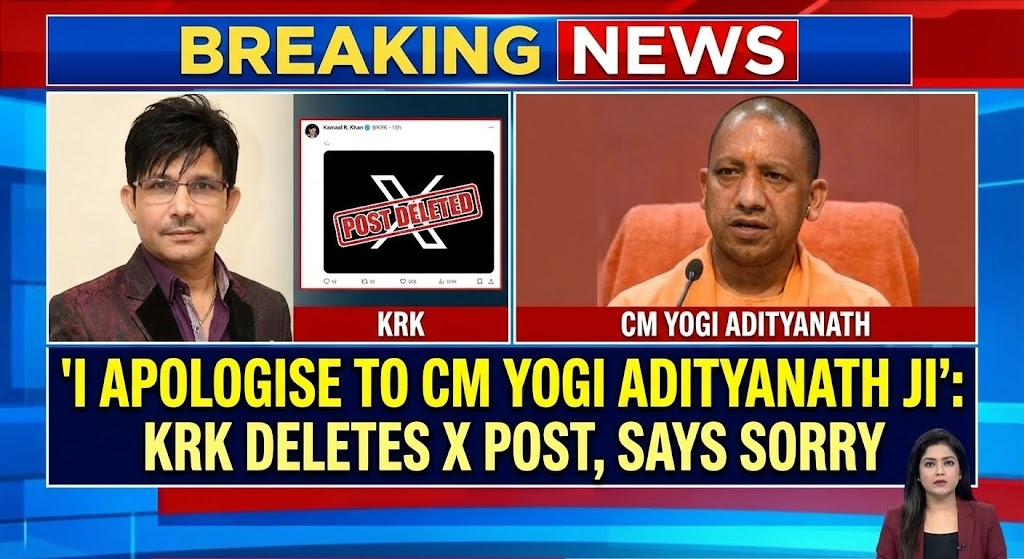
On January 2, KRK deleted the critical post and shared a new message on X. In his apology, he stated: “I apologise to CM Yogi Adityanath Ji”, acknowledging that his previous wording was inappropriate and expressing regret for any hurt or misunderstanding. The apology message was brief but unmistakable in tone — a rare public retraction by the controversial figure who is typically unrepentant in his social media style.
After deleting the original tweet, KRK shared a fresh post expressing regret and offering his “full apologies” for the language used. He appealed for forgiveness “with respect and humility” and noted that he did not intend to disrespect CM Adityanath, whom he acknowledged as an elected leader working for the state’s progress.
The apology was reposted by several news pages and users who took the moment as either a genuine act of regret or a forced course correction due to social and political pressure.
Political Reactions
Political observers and BJP leaders responded swiftly. Many welcomed the apology, describing KRK’s post as “wrong” and “inappropriate.” Some BJP social media affiliates highlighted the episode as an example of how public figures should exercise caution and respect when engaging with political discourse online.
A spokesperson for the BJP in Uttar Pradesh said the apology was “a welcome step” and reiterated that public dialogue should be respectful, even when criticism is permitted. Such remarks reflected the broader party position that freedom of speech carries responsibility — especially when involving public representatives.
Opposition commentators, while critical of KRK’s earlier remarks, offered a mixed response to the apology. Some said it was “necessary” while others described it as “too late” or “convenient.” The episode became fodder for debate across political podcasts, news shows, and social feeds.
Social Media Response
On X, the apology generated hundreds of thousands of engagements — including likes, replies and shares. Reactions ranged widely:
- Supportive voices: Some users appreciated his decision to retract the earlier post and view it as a mature step.
- Sceptical voices: Others questioned whether the apology was genuine or strategically timed in response to backlash.
- Political debate: Many used the moment to launch broader discussions about political criticism, accountability, and the limits of social media commentary.
Hashtags related to the event — including #KRKApologises and #RespectPublicFigures — trended for hours on Indian social platforms.
Celebrity Involvement and Broader Impact
Kamaal R. Khan is known in Bollywood and internet culture for polarising commentary on films, personalities and politics. Though his fame originally stemmed from film reviews and occasional acting roles, his online presence has grown into one of the most referenced — and controversial — in Indian digital media.
The apology to a sitting Chief Minister amplified public focus on how social media influencers handle political critique. In recent months, several celebrities have faced backlash or legal scrutiny over social media posts involving political or religious topics — including defamation claims and regulatory actions by platform or governmental bodies. KRK’s episode enters that broader narrative.
Freedom of Speech vs. Political Sensitivities
KRK’s initial criticism and subsequent apology underscores an ongoing tension in Indian digital life: balancing freedom of expression with respect for public office and political stability.
Some commentators noted that public figures must be open to criticism — especially in democratic societies — but many agreed that language and tone matter. Others argued that calls for apology in such circumstances can chill legitimate critique. The debate — airing on TV news and social media — highlighted key questions:
- Should public figures be exempt from critique?
- Where should the line be drawn between criticism and disrespect?
- What role do social media platforms play in managing such disputes?
Legal experts noted that India’s laws allow criticism but also criminalise offensive or defamatory statements in certain contexts — a balance that courts and lawmakers continue to debate.
KRK and the Law: What Precedent Says
The incident involving KRK — although resolved with an apology — also invites legal context. Indian law, including the Indian Penal Code (IPC) and Information Technology Act, includes provisions against defamation and hate speech. Public figures often have a higher threshold for handling criticism, but there are limits when comments are considered offensive, abusive, or likely to incite disruption.
Legal analysts said the swift deletion and apology likely averted potential legal escalation, which might have included complaints, notices from authorities, or platform action. Because KRK has a high-visibility platform, critics noted that influencers must exercise greater care in expressing views about political leaders.
Celebrity Politics: A Larger Trend
KRK’s apology mirrors a larger trend involving celebrities, where political commentary on social platforms triggers rapid and intense public reaction. In recent years, multiple actors, sports figures and influencers have faced scrutiny over online posts on political or social issues — resulting in:
- Public apologies
- Legal notices
- Platform content moderation
- Political backlash
The KRK episode is unlikely to be the last such case, as digital discourse continues to intersect with politics increasingly — especially around topics that prompt fierce debate like governance, religion, policy, and regional identity.
What This Means for Influencers and Public Figures
KRK’s experience offers a cautionary lesson for influencers across domains:
- Words matter: Comments about public figures can escalate rapidly across social media platforms.
- Legal risk: Certain statements — even if meant as opinion — could attract legal challenges under defamation or cyber law provisions.
- Political climate: India’s political environment remains highly charged, and missteps can lead to intense backlash.
Influencers may increasingly find themselves weighing freedom of speech against reputation risk and legal implications, especially when engaging with political topics that resonate widely.
Public Takeaways
Across opinions and responses, several themes emerged in commentary on KRK’s apology:
Respectful discourse: Many observers emphasised that while criticism is allowed, maintaining a respectful tone helps keep public conversation constructive.
Digital accountability: Platforms like X have guidelines that discourage abusive content — and high-profile users are particularly visible targets for enforcement and community reporting.
Political context matters: In India, political leaders and public representatives often attract passionate support — any commentary is viewed through a complex social lens.
Celebrity influence: Public figures who step into political commentary face expectations of responsibility given their reach and impact.
Summary
Controversial celebrity commentator Kamaal R. Khan deleted a critical social media post about Uttar Pradesh Chief Minister Yogi Adityanath and issued an apology, saying “I apologise to CM Yogi Adityanath Ji”.
The apology followed strong public and political backlash to his earlier comments. KRK’s decision has sparked widespread discussion about freedom of expression, online conduct for public figures, and the legal and political sensitivities that come with digital commentary in India.
In a rapidly evolving digital landscape, the incident highlights how influencers, actors and celebrities navigate public discourse — and the balance between personal opinion and respectful engagement with political figures.