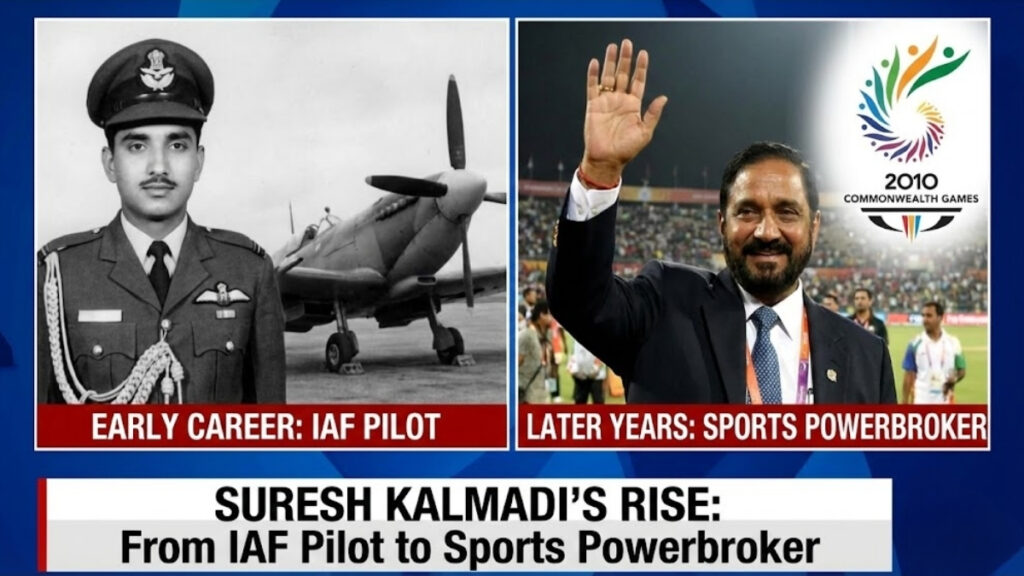
Lede: Suresh Kalmadi, a towering and divisive figure in Indian sport administration, passed away on January 6, 2026. His career spanned service as an Indian Air Force pilot, long stints in Parliament, and more than two decades as one of the country’s most influential sports administrators. Kalmadi’s record mixes high-profile achievements, including bringing global events to India, with a corruption scandal that shadowed his later years.
From the cockpit to public life
Born in Madras in 1944 and educated at Fergusson College in Pune, Kalmadi began his working life in the Indian Air Force in 1964. He served first as a commissioned pilot and later as an instructor, retiring with the rank of Squadron Leader in 1974. His transition into politics followed soon after, when he was noticed by senior Congress leaders and rose through the party’s state and national ranks.
Kalmadi was elected to the Rajya Sabha multiple times and later served in the Lok Sabha representing Pune in the late 1990s and again in the 2000s. He also held a minister of state portfolio for railways. His political grounding gave him the networks and influence that later proved decisive in sports administration.
Architect of major sporting events in India
Kalmadi became synonymous with Indian athletics and multi-sport events. He led the Athletics Federation of India for nearly two decades and later became president of the Indian Olympic Association. Under his stewardship India hosted a string of events such as the 2003 Afro-Asian Games, the 2008 Commonwealth Youth Games, and the 2010 Commonwealth Games.
He also helped revive the National Games and organised athletics meets that brought international competitors to India. These achievements reshaped India’s sporting calendar and raised the country’s profile in the international sports community.
Commonwealth Games controversy and legal aftermath
Kalmadi’s public image changed dramatically after allegations of corruption surrounding the 2010 Commonwealth Games in Delhi. He was arrested in connection with procurement and contract irregularities while serving as chairman of the Games’ organising committee. The scandal became one of India’s highest profile corruption controversies and dominated headlines for years.
In 2025 the Enforcement Directorate filed a closure report in the Commonwealth Games case. That step effectively cleared Kalmadi of the charges that had long tarnished his reputation, though the episode had already left a lasting mark on public perceptions of governance in Indian sport. Kalmadi had consistently denied wrongdoing.
A complicated legacy
Colleagues and critics offer sharply different readings of Kalmadi’s impact. Supporters point to tangible gains: a strengthened domestic athletics circuit, renewed momentum for multi-sport events across Indian cities, and recognition from international bodies such as the Association of National Olympic Committees. During his tenure in sports administration India also registered important milestones, including its first individual Olympic gold in 2008.
Detractors see a leader whose methods and associations invited suspicion. The Commonwealth Games scandal became shorthand for mismanagement and corruption in big-ticket sporting projects. For many observers, that episode overshadowed earlier accomplishments and raised questions about accountability at the highest levels of sport administration.
Regional and international roles
Beyond India, Kalmadi held positions on regional sporting bodies. He served as president of the Asian Athletics Association and was a member of international councils, extending his influence across Asia and into global athletics governance. These roles helped him to attract continental meets to India and to build relationships with international sports officials.
Reaction and remembrance
Condolences and reflections poured in from former colleagues, athletes and sports officials after news of his death. Many remembered Kalmadi as a resourceful administrator who could get things done. Others noted how the controversies of the 2010 Games complicated any simple verdict on his life and work. Several statements called for recognition of his contributions while acknowledging the controversies that accompanied his career.
Why Kalmadi mattered
Suresh Kalmadi’s story captures a set of tensions that have defined Indian sports governance in recent decades. He was a builder who helped expand India’s event portfolio and international footprint. At the same time, his career exposed governance gaps and the potential for high-stakes projects to become embroiled in allegations of corruption. That duality makes his legacy important for policymakers and sports administrators who follow.
Looking ahead
Kalmadi’s death will prompt renewed discussion about leadership and reform in Indian sport. His tenure offers lessons on how to mobilise resources, host major events and engage international bodies. It also highlights the need for stronger transparency and oversight to prevent governance failures. As India continues to bid for and host international events, the balance between ambition and accountability will remain a central policy concern.