The blockbuster success of Dhurandhar — starring Ranveer Singh and featuring a powerful performance by Akshaye Khanna as the antagonist Rehman Dakait — has sparked not just box office buzz but plenty of behind-the-scenes stories about how the film came together.
One of the most intriguing revelations comes from veteran casting director Mukesh Chhabra, who recently opened up about his initial offer to Khanna for the role that would ultimately become a career-highlight performance.
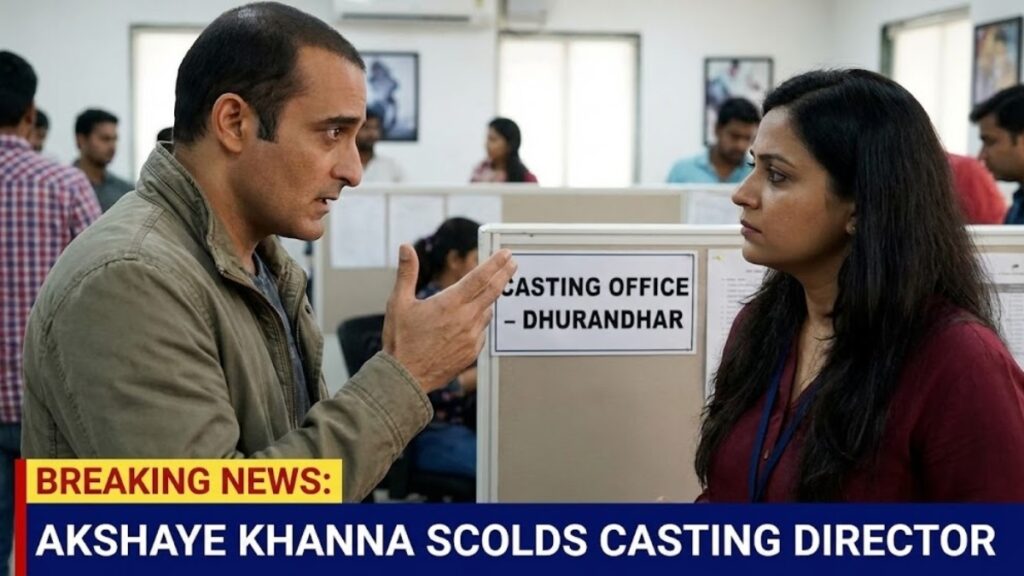
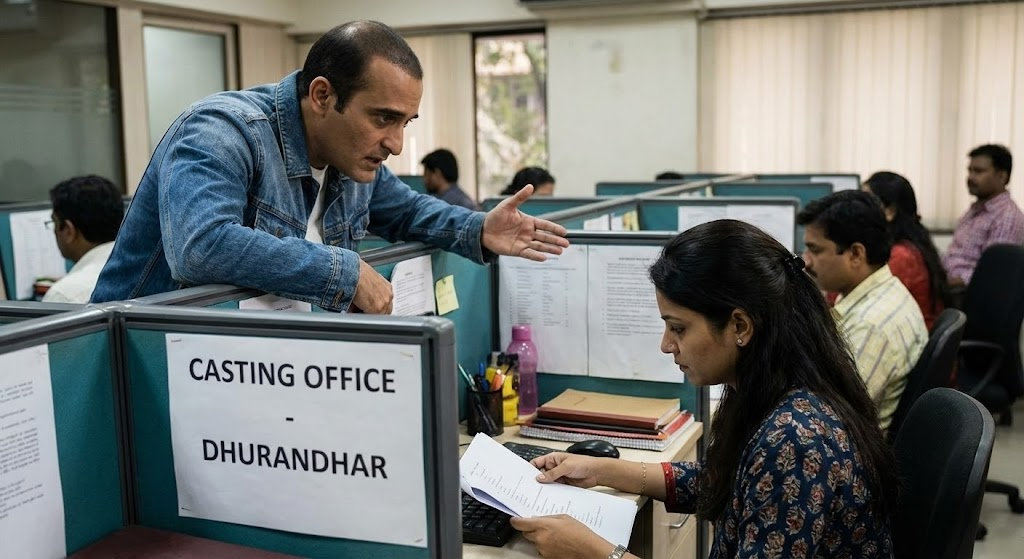
According to Chhabra, the conversation did not go smoothly at first — in fact, Khanna’s initial response was far from enthusiastic. “He scolded me,” Chhabra recalled, laughing, when asked about his first attempt to convince Khanna.
The actor reportedly responded to the offer by saying something like “Paagal ho gaya hai kya?” — Hindi for “Have you gone crazy?” — underscoring how unexpected the idea of him playing the fearsome Rehman Dakait seemed at the time.
Despite that blunt reaction, Chhabra didn’t give up. After persistently persuading Khanna, the actor agreed to a meeting with Chhabra and director Aditya Dhar, even driving himself to the session — a sign of his candour and simplicity.
The meeting extended for about four hours, during which Khanna quietly listened to the script narration, often smoking, before finally offering enthusiastic praise. “F**k, it’s very good,” he said, Chhabra recalled, adding that the actor felt it would be “a lot of fun” to do the project.
That moment marked a turning point. A few days of uncertainty followed, but Khanna eventually confirmed his participation with a direct call to Chhabra: “Let’s do it, bro.” The rest, as they say, is cinematic history.
A Role That Defied Expectations
Rehman Dakait is not a conventional hero role — he’s a gritty antagonist inspired by real underworld figures, demanding both menace and nuance. Critics and audiences alike have singled out Khanna’s performance as a standout in Dhurandhar, often elevating the film’s emotional and narrative impact.
The character’s look and evolution also stirred creative debate behind the scenes, with costume designers and the actor himself refining the visual identity to better reflect Dakota’s street-rooted persona. Although Khanna was initially hesitant with certain styling choices, his input helped shape a final look that feels authentic and layered.
This creative investment paid off. In promotional materials and viral clips — such as a dance sequence shared by co-star Ranveer Singh — Khanna’s presence repeatedly crackled with intensity, contributing to the film’s cultural reach and memorability.
Casting Challenges and the Mumbai Star System
Mukesh Chhabra’s comments also shine a light on the broader challenges of casting in Bollywood, particularly when working with high-profile actors. With a marquee name like Ranveer Singh already attached as the lead, Chhabra noted it’s “practically impossible” to bring in additional big stars because the industry tends to center marketing around single flagship names.
That context helps explain why Chhabra’s persistence in pursuing Khanna was so notable — and why the latter’s eventual agreement was a coup for the filmmakers. It wasn’t just about landing a recognizable face; it was about securing an actor whose craft could bring depth and unpredictability to a complex antagonist.
From Casting Skepticism to Critical Acclaim
Khanna’s journey from initial resistance to deeply committed performance mirrors Dhurandhar’s own rise at the box office and in critical conversation. The film has achieved major commercial success, breaking records and sparking debate about character portrayal and narrative choices.
Actors, filmmakers, and critics have since weighed in on the cultural impact of Khanna’s role. Praise has flowed from peers — such as actress Ameesha Patel, who lauded his humility and powerful portrayal — even as industry discussions swirl around his recent professional choices and future work.
Yet at the heart of many accounts is one simple truth: this particular role in Dhurandhar would likely not have materialised without Khanna’s eventual buy-in after a memorable initial reaction.
Why It Matters
This anecdote resonates for several reasons:
- It highlights how casting choices can redefine a film’s narrative impact, especially when unconventional decisions pay off dramatically.
- It reveals the human side of filmmaking — with actors and directors navigating ego, artistry and persuasion in equal measure.
- It underscores Akshaye Khanna’s current artistic moment: an actor once known for deliberate selectivity who now stands at the center of one of Bollywood’s most talked-about performances.
The story of how he went from skeptical to standout is now itself part of Dhurandhar’s legacy — proof that even in an industry rife with formula, smart, fearless choices continue to shape culture and conversation.