
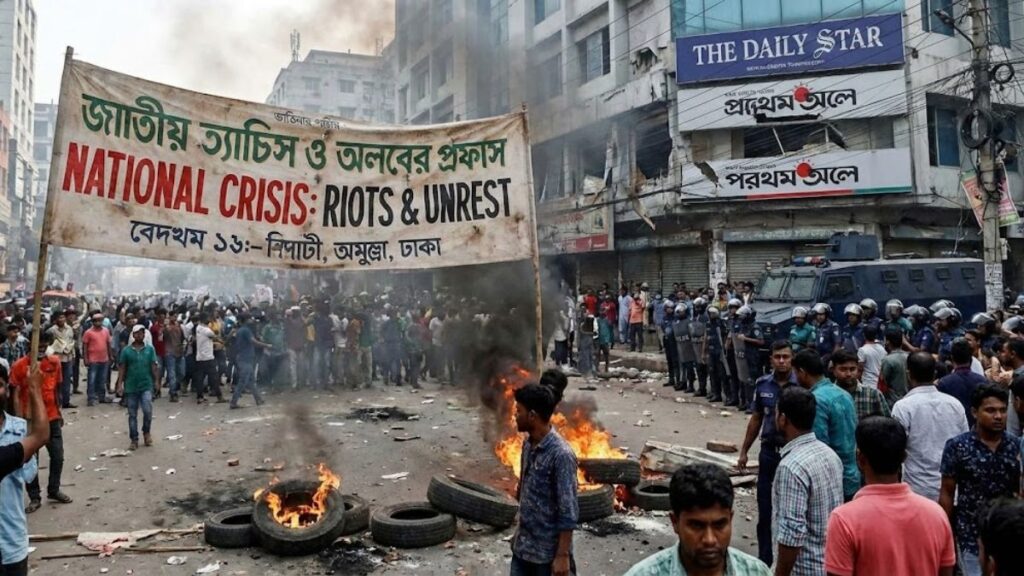
Bangladesh has entered one of its most serious periods of internal unrest in recent years. Violent riots, political protests, and mob attacks have spread across several parts of the country. What began as a demand for justice over the death of a young political activist has grown into a nationwide crisis, raising serious concerns about public safety, minority protection, and press freedom.
Major cities such as Dhaka, Chittagong, Khulna, Rajshahi, and Sylhet witnessed days of clashes between protesters and security forces. Streets were blocked. Vehicles were set on fire. Buildings were damaged. In many areas, authorities imposed curfews as the situation slipped out of control.
Normal life was disrupted across the country. Public transport stopped running. Schools and colleges were closed. Offices shut early. Many residents stayed indoors, unsure of when calm would return.
The speed at which the unrest spread has alarmed citizens and observers alike. The violence has exposed deep political divisions and long standing social tensions.
Trigger Point: Death of a Youth Leader
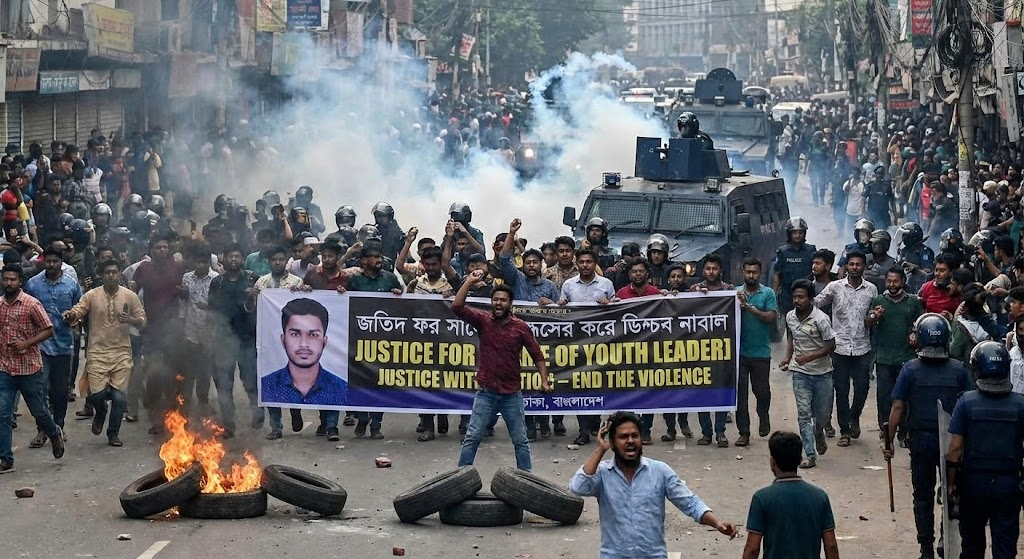
The immediate trigger for the unrest was the death of Sharif Osman Hadi, a well known youth activist connected to last year’s pro democracy movement. Hadi had suffered gunshot injuries during a confrontation earlier this year. He later died while receiving medical treatment abroad.
News of his death sparked anger, especially among students and young activists. Many accused authorities of failing to hold those responsible accountable. Social media platforms filled with calls for justice and protests.
Thousands gathered on university campuses and city streets. They carried placards and shouted slogans demanding accountability and political reform. In the early stages, the protests remained peaceful.
Tensions rose when police moved to disperse crowds. Clashes followed. Protest leaders accused security forces of using unnecessary force. Officials said demonstrators were attempting to provoke violence.
Protests Turn Violent Riots
As days passed, the protests spread beyond campuses and central districts. Residential areas and semi rural regions were affected. Barricades were erected on major roads. Government offices and police stations were attacked.
Public buses, trains, and private vehicles were vandalized or burned. In some districts, looting was reported as law enforcement struggled to maintain control.
Security forces responded with tear gas, rubber bullets, and baton charges. Authorities confirmed injuries among police personnel and protesters. Independent verification of casualty figures remained difficult due to curfews and communication restrictions.
Hospitals reported a steady rise in patients with injuries caused by clashes, fires, and stampedes. Medical staff said emergency wards were under heavy pressure.
Cities Gripped by Fear
In Dhaka, entire neighborhoods fell silent after sunset. Residents described nights filled with fear as sirens echoed and fires lit up the streets. Many families avoided using lights inside their homes to avoid attention.
In Chittagong and Khulna, markets were damaged and transport hubs shut down. Rajshahi and Sylhet saw repeated clashes over several days. In many places, public transport remained suspended.
Daily wage workers were among the worst affected. Without transport or open markets, many lost their income. Families rushed to buy essentials whenever shops briefly reopened.
Several residents said they had not experienced such prolonged unrest in years.
Attacks on Media Houses
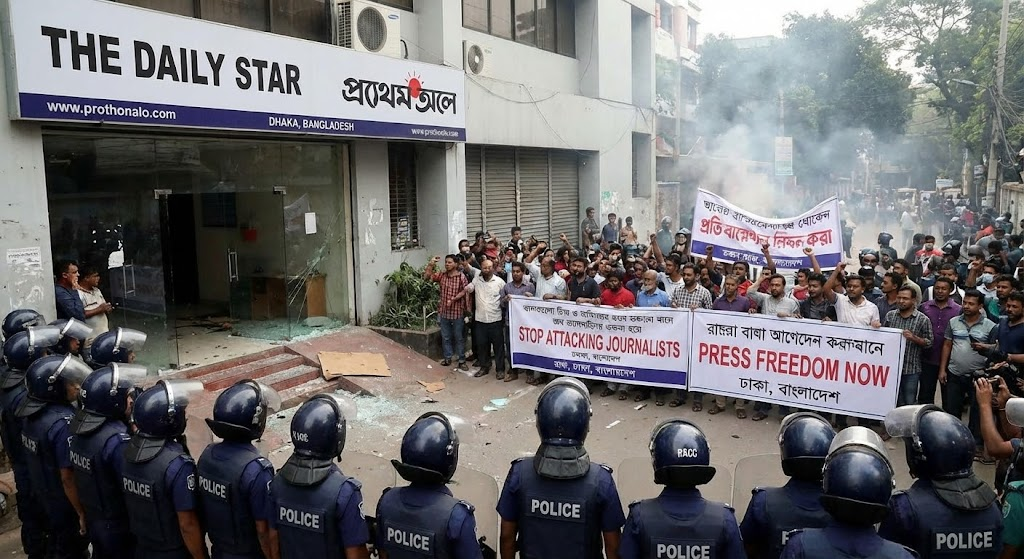
One of the most troubling developments was the targeted attack on media organizations. Mobs vandalized and burned offices of major national newspapers and television outlets. Printing presses were damaged. News vehicles were torched. Equipment and archives were destroyed.
As a result, several newspapers were forced to suspend printing temporarily. Journalists reported being threatened, chased, and assaulted while covering protests.
Media rights groups condemned the attacks and called them a direct assault on press freedom. They said journalists were being punished for reporting facts during a national crisis.
Many reporters said they stopped wearing press identification for safety. Some continued reporting under extreme risk.
The interim administration condemned the attacks and promised investigations. Critics said the response came too late and failed to prevent further damage.
Mob Violence and Minority Targeting
Alongside political unrest, incidents of mob violence shocked the nation.
In a northern district, a Hindu man was lynched following allegations of blasphemy. According to eyewitnesses, the victim was beaten by a mob, tied to a tree, and set on fire. The incident triggered widespread outrage.
Religious leaders from different communities condemned the killing. Human rights groups warned that such violence reflects rising intolerance and weak law enforcement.
In another incident, a mob attacked the home of a political figure. The house was set on fire. A seven year old child died in the blaze. Images from the scene spread quickly and drew strong condemnation from civil society groups.
Minority leaders expressed fear over the safety of their communities. Many families avoided public gatherings. Some moved women and children to safer areas.
Rights groups warned that breakdowns in law and order often lead to vigilantism. They urged authorities to act firmly against mob violence.
Government Response and Security Measures
Chief Adviser Muhammad Yunus addressed the nation as violence intensified. He appealed for calm and unity. He said the state would not tolerate mob killings or attacks on journalists.
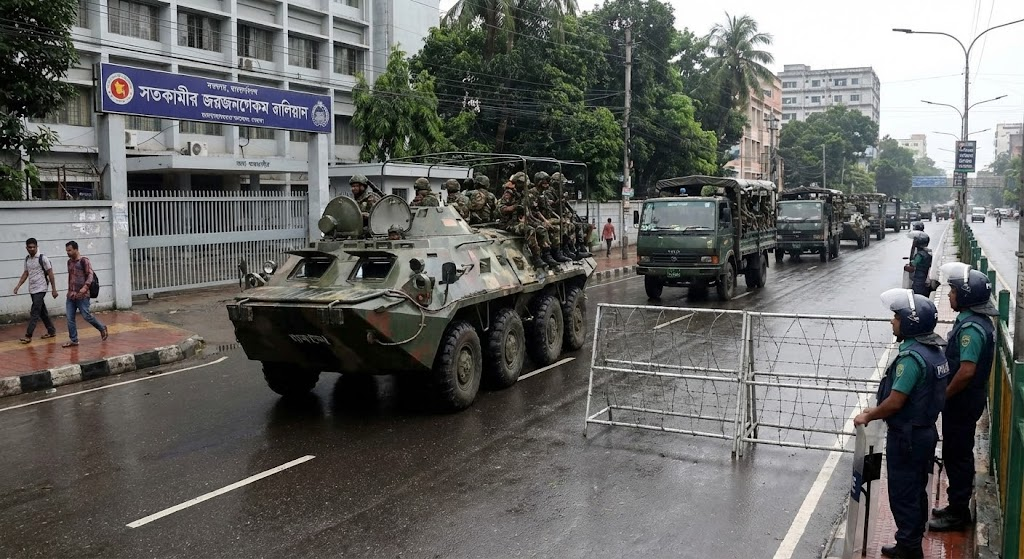
Authorities deployed additional police units and paramilitary forces to sensitive districts. The army was placed on standby in several regions to assist if needed.
Curfews were enforced strictly in affected areas. Security checkpoints were set up. Patrols increased in urban centers.
The government said hundreds of people had been detained for involvement in violence, arson, and vandalism. Special investigation teams were announced to probe mob killings and attacks on media houses.
Despite these steps, many citizens remain doubtful about whether justice will follow.
Political Fallout and Reactions
Opposition parties accused the administration of failing to maintain law and order. They demanded an independent judicial inquiry into the youth leader’s death and the violence that followed.
Opposition leaders said excessive force against protesters worsened the situation. They claimed early warnings were ignored.
Ruling party figures rejected these claims. They said opposition backed groups used the protests to create chaos. They accused certain factions of deliberately targeting journalists and minorities to damage the country’s image.
Political analysts said the unrest reflects deeper structural issues. Public trust in institutions remains weak. Grievances from past elections remain unresolved. Many young citizens feel disconnected from the political system.
Regional and Diplomatic Concerns
The crisis has drawn attention beyond Bangladesh’s borders. Neighboring countries expressed concern, especially over incidents involving minority communities.
Several foreign missions advised their citizens to remain cautious and avoid large gatherings. International human rights organizations called for restraint.
They urged authorities to protect civil liberties while restoring order and to ensure transparent investigations into all allegations of violence.
Impact on Daily Life and Economy
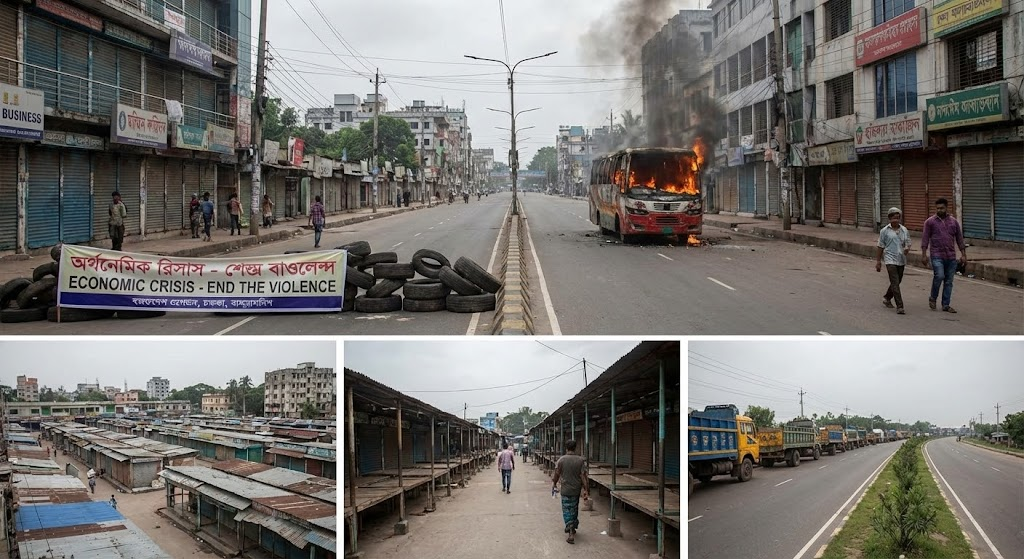
The unrest has taken a heavy toll on daily life and economic activity.
Markets closed repeatedly. Supply chains were disrupted. Small business owners reported significant losses. Many said recovery would be difficult.
Garment factories in industrial zones faced disruptions as worker transport became unreliable. Export schedules were affected.
Economists warned that continued instability could damage investor confidence. Bangladesh is already facing global economic challenges.
Tourism suffered another setback as travel advisories increased. Hotel bookings declined sharply.
Families in curfew hit areas reported shortages of food and essential supplies during prolonged shutdowns.
Voices from the Ground
Residents in affected areas described nights of fear and uncertainty. Many stayed awake listening to sounds of violence outside their homes.
Shop owners spoke of watching years of savings destroyed in a single night. Students said their peaceful movement was overtaken by violent elements.
Journalists described working under constant threat. Many said they struggled to balance public duty with personal safety.
Human rights defenders stressed that accountability is essential. They said justice must be visible and fair to prevent future unrest.
The Road Ahead
In recent days, a tense calm has returned to several cities. Security forces remain deployed. Curfews have been relaxed in some areas but remain in place elsewhere.
Sporadic incidents continue to be reported. Political leaders have called for dialogue to prevent further escalation.
The crisis has exposed serious fault lines in Bangladesh’s political and social system. Restoring trust will require transparent investigations, protection of minorities, safeguarding of press freedom, and meaningful engagement with young citizens.
For now, Bangladesh stands at a critical moment. The streets are quieter, but the impact of the unrest remains deep. Many citizens hope for peace, justice, and a stable return to normal life.