
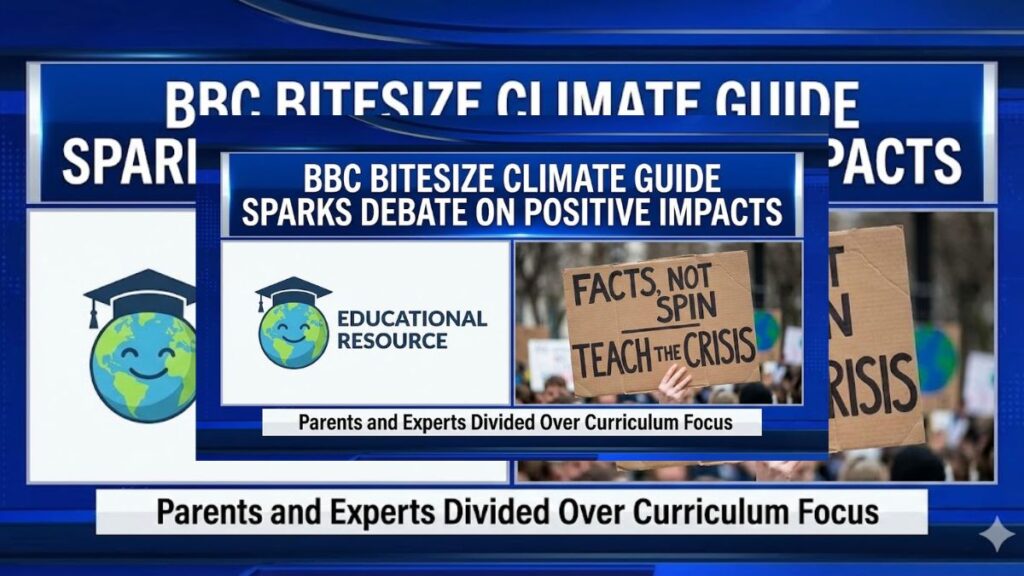
A widely used BBC educational resource aimed at school pupils has triggered controversy after it listed positive as well as negative impacts of climate change in its study material. The page, part of the BBC’s Bitesize learning service for students, was flagged by educators, environmental campaigners, and scientists alike for what critics described as a false balance on a topic where the scientific consensus highlights severe risks and harmful consequences.
BBC Bitesize is a free digital education platform produced by the British Broadcasting Corporation. It provides curriculum‑linked study guides, videos, quizzes, and revision tools for learners from early years through to secondary education. Bitesize content is widely used by teachers, pupils, and parents across the UK and internationally. (General knowledge)
What the Bitesize Article Contained
The specific article in question, identified by its internal code zrk83qt, explored the effects of climate change, with a list of both negative and purportedly positive outcomes. While the negative impacts — such as rising sea levels, species extinction, extreme weather events, and flood risk — appeared first, the material also included points framed as positive effects of a warming climate. Among these were suggestions that:
- Warmer temperatures and higher levels of carbon dioxide could boost plant growth in certain regions.
- Some areas of previously frozen land might become suitable for agriculture.
- New shipping routes could open as polar ice continues to retreat.
Reaction and Criticism
The inclusion of seemingly beneficial impacts drew sharp criticism from scientists and commentators who argued it risked downplaying the severity of climate change and could mislead young learners about the scale of global environmental threats. Environmental writer George Monbiot called the guidance “an absolute disgrace” for creating an impression that climate breakdown might bring overall benefits.
He warned that such lists could “make it sound pretty good”, undermining clear scientific messaging about the urgency of reducing greenhouse gas emissions.
Critics said that educational resources should reflect the overwhelming scientific consensus — as embodied by the Intergovernmental Panel on Climate Change (IPCC) — that climate change poses major risks to ecosystems, infrastructure, and human well‑being, with only limited and localized benefits in very specific contexts like extended growing seasons in some high‑latitude areas.
BBC Response and Revisions
In response to the backlash, the BBC stated that it had reviewed the content and would make amendments to ensure the educational material accurately reflects current scientific understanding. The broadcaster emphasised its intention to support balanced learning while maintaining scientific rigour.
BBC Bitesize serves millions of students and educators across the UK and beyond. The platform’s educational mission is to inform and help learners progress with clear, accessible content. However, the climate change incident highlighted the challenges of simplifying complex scientific issues for younger audiences without inadvertently creating misunderstandings.
The Challenge of Teaching Climate Change
Climate science is inherently complex, involving global systems, uncertainty ranges, socioeconomic factors, and long‑term projections. In recent years, educators have sought to make this topic accessible to students while grappling with how to present both the scientifically documented risks and the broader implications of a changing climate on society, ecology, and economies.
Experts in science communication stress that while some changes in local conditions — such as longer growing seasons in northern regions — might occur, these do not outweigh the net negative impacts of climate warming on food security, human health, water resources, and biodiversity worldwide. Many educators advocate for materials that emphasise the scientific consensus and risk management rather than selective positives.
Educational Impacts
For many teachers, Bitesize is a trusted revision tool that supports classroom learning and exam preparation. The content in question had been linked to topics such as geography, science, and environmental studies, where understanding climate change is increasingly part of national curriculum frameworks. The Higher School Certificate and GCSE syllabuses, for example, include climate change as a core theme. (General education context)
According to academic commentators, presenting climate change as a mix of pros and cons without sufficient context may confuse students and underplay the weight of scientific evidence about long‑term global risk.
Broader Discussion on Curriculum Materials
The incident reflects a broader debate about how educational resources handle contentious or politically charged topics. Should teaching materials present every possible perspective, even if some aspects are marginal or controversial among experts? Or should they prioritise the strongest scientific consensus and avoid speculative positives that might mislead learners?
This discussion occurs against the backdrop of increasing public interest in climate issues, with youth movements, government policy targets, and international agreements driving conversation in schools and media alike.
What Comes Next
The BBC’s commitment to revise the material suggests that future editions of the Bitesize page will more clearly communicate why climate change is primarily a challenge with significant risks, while still acknowledging that some local changes may have differing effects. Educators and stakeholders will be watching closely to see how the updated resource balances accuracy, accessibility, and relevance for students.
The episode also underlines the importance of ongoing review and expert input in educational content, especially on subjects where scientific understanding continues to evolve and where public discourse can shape perceptions.