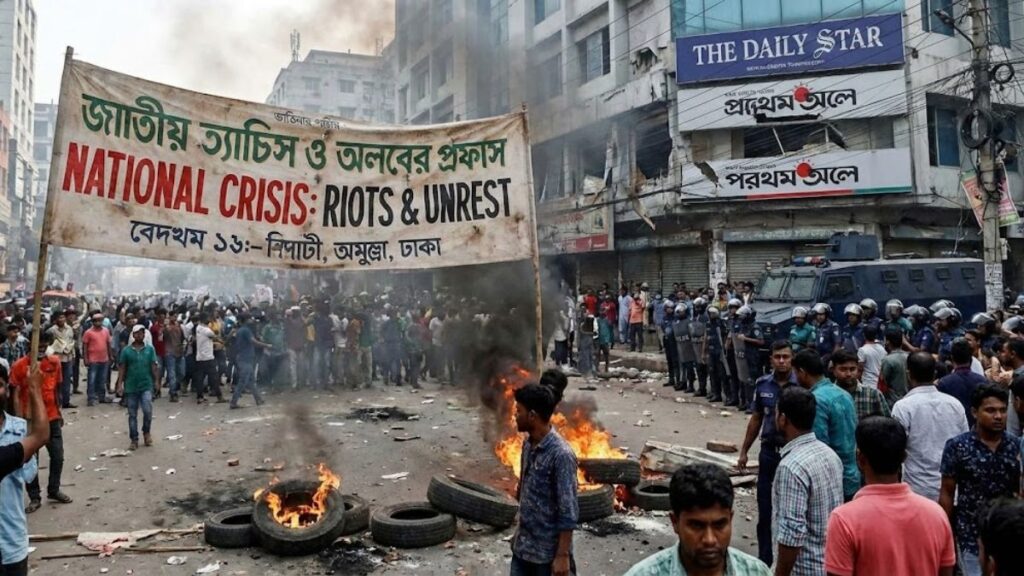
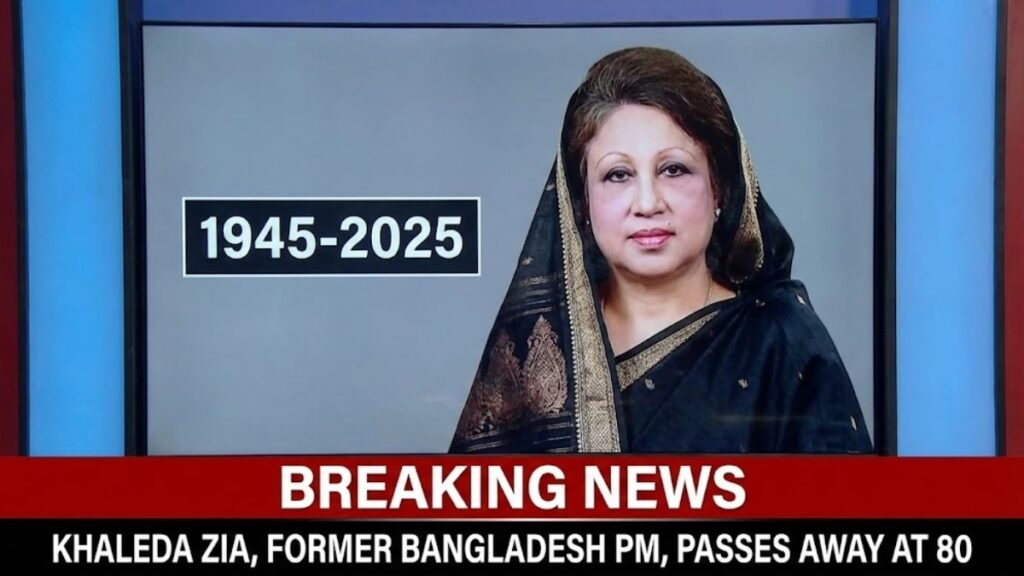
Dhaka / New Delhi, December 30, 2025 — Begum Khaleda Zia, the first woman to serve as prime minister of Bangladesh and a central figure in the country’s modern politics, has died at the age of 80 after a prolonged illness, her party confirmed early Tuesday morning. Zia’s passing marks the end of a distinctive era in Bangladesh’s political history, defined by fierce rivalries, democratic struggles and evolving relationships with neighbouring countries including India.
According to statements from the Bangladesh Nationalist Party (BNP), Zia passed away around 6:00 a.m. local time while receiving treatment at Evercare Hospital in Dhaka, where she had been hospitalised for more than a month. The BNP’s official social media account shared the news and appealed for prayers for her soul.
Zia had been battling a host of age-related health problems, including advanced liver cirrhosis, diabetes, arthritis, and complications affecting her heart and lungs, which worsened over recent weeks despite intensive medical care.
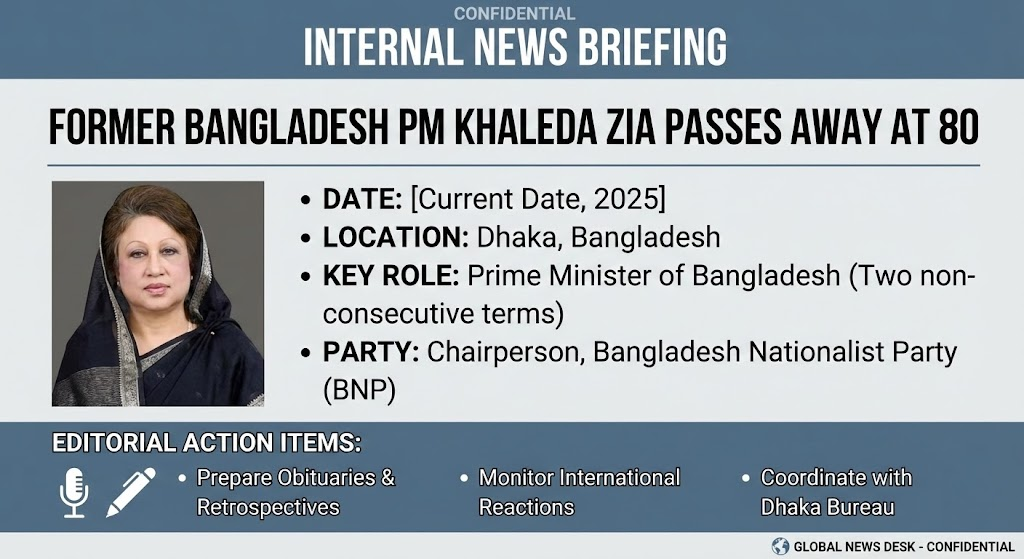
A Pioneering Political Career
Born in 1945, Khaleda Zia emerged on the political scene after the assassination of her husband, President Ziaur Rahman, in 1981. In the decades that followed, she became one of Bangladesh’s most influential leaders, steering her party and government through turbulent periods.
Zia first took office as prime minister in 1991, after Bangladesh’s return to a parliamentary democracy. She served two full terms (1991-1996 and 2001-2006), and briefly led a caretaker government in between. Her tenure was notable for transforming Bangladesh’s governance system, consolidating parliamentary rule and enlarging the political space for opposition parties.
Her career was also shaped by a decades-long political rivalry with Sheikh Hasina, leader of the Awami League and another towering figure in Bangladeshi politics. The two women alternated in power for years, and their rivalry became a defining feature of the nation’s political landscape.
Throughout her life, Zia’s leadership was both celebrated and contested. Supporters lauded her as a champion of democracy, especially during times of military rule, while critics pointed to allegations of corruption and criticised her leadership style.
Her Impact on India–Bangladesh Relations
Khaleda Zia’s approach to Bangladesh’s foreign policy, especially with India, was a blend of pragmatism and assertiveness. Her relationship with New Delhi was complex and at times marked by tension, shaped by concerns over national sovereignty and strategic interests.
During her terms as prime minister, Zia took firm stances on issues such as transit rights and water sharing. She opposed Indian overland transit rights for trucks crossing Bangladesh into India’s northeastern states, arguing that such arrangements could infringe on her nation’s autonomy. At times she described certain proposals as akin to “slavery,” underscoring her resistance to what she saw as undue influence.
Her government also resisted renewal of early friendship treaties with India, and pursued defence agreements with China, intensifying perceptions in Delhi of strategic competition.
Nevertheless, there were moments of pragmatic cooperation. In 2006, Zia visited India to sign trade agreements and a new anti-drug smuggling accord — steps that signalled a willingness to engage productively despite political differences.
India responded to her passing with tributes that highlighted her role in shaping ties between the two nations. Prime Minister Narendra Modi recalled past meetings with Zia and said her vision would continue to guide India–Bangladesh cooperation.
Political Landscape and the Road Ahead
Zia’s death comes at a critical moment for Bangladesh. National elections are scheduled for February 2026, the first since a period of sustained political turmoil that saw major shifts in power.
Her son, Tarique Rahman, the acting chairman of the BNP, had returned to Bangladesh in recent weeks after nearly two decades in exile. He was widely seen as a key contender for leadership in the upcoming elections, and nominations had already been filed on Zia’s behalf for a parliamentary seat before her death.
With Zia’s passing, the dynamics within the BNP and the wider opposition landscape may now shift significantly. Some analysts predict that Rahman’s leadership could consolidate support among BNP loyalists, while others caution that the loss of Zia’s personal appeal and symbolic stature may pose challenges for the party’s electoral prospects.
Political observers also note that this is the first major election in decades without the presence of either Khaleda Zia or Sheikh Hasina as active contenders, fundamentally altering the nation’s electoral calculus.
Legacy: A Life of Influence and Controversy
Khaleda Zia’s legacy will be debated for years to come. Supporters remember her as a trailblazer for women’s leadership in a Muslim-majority country, and as a leader who helped anchor Bangladesh’s democratic institutions after periods of military and authoritarian rule.
Critics point to corruption allegations and legal challenges that dogged her later years, including convictions that her supporters claimed were politically motivated. Her final years were marked by health struggles and a period of limited political activity, even as she remained the BNP’s symbolic leader until her death.
Historians are likely to view Zia’s career as emblematic of a transformative era in South Asian politics — one in which national identity, regional diplomacy and deeply rooted party rivalries shaped the course of governance and public life in Bangladesh.
Public and Diplomatic Reactions
News of Zia’s passing has sparked an outpouring of reactions both within Bangladesh and internationally. Political leaders, civil society groups and citizens have expressed condolences and reflected on her contributions to national life.
In India, statements from government officials have emphasised shared history and cooperation, while acknowledging the challenges that marked aspects of bilateral relations during her leadership.
World leaders and diplomatic missions have also extended sympathies, highlighting Zia’s role in shaping Bangladesh’s democratic journey and her influence on South Asian politics.
Conclusion
The death of Khaleda Zia marks a watershed moment for Bangladesh. As a pioneering female leader and a key architect of the country’s parliamentary democracy, her influence transcended party lines and left a lasting imprint on the nation’s political culture. Her leadership was defined by fierce rivalries, hard-fought political battles and a persistent drive to shape her country’s future.
Her passing not only closes a defining chapter in Bangladesh’s history, but also heralds a period of uncertain transition in a nation poised for a crucial democratic contest. The legacy of Khaleda Zia, in all its complexity, will remain a topic of deep discussion among scholars, policymakers and citizens alike in the years ahead.