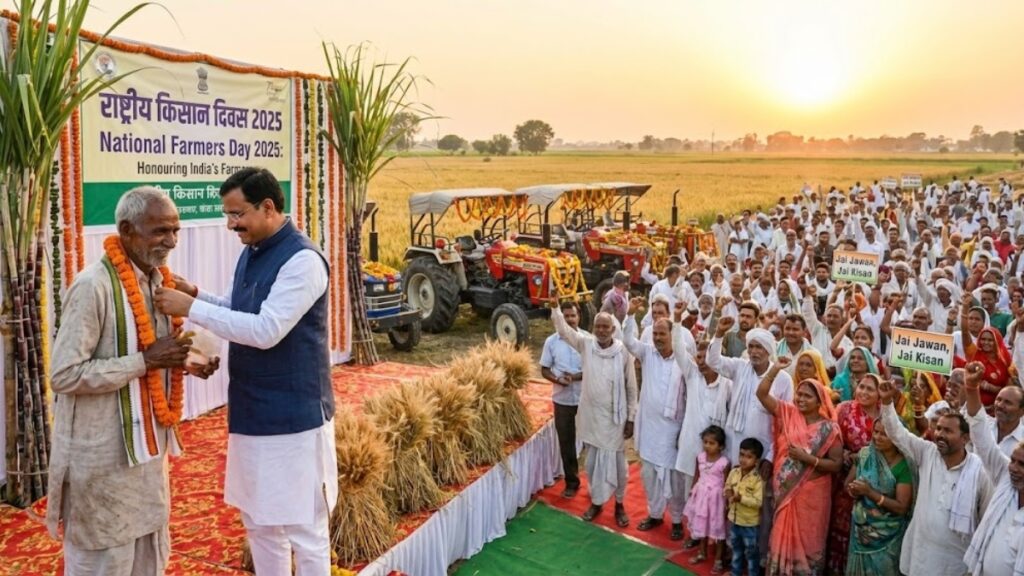
New Delhi, India – December 23, 2025 – Today the country marks National Farmers Day 2025, also called Kisan Diwas. This day is set aside to thank and honour the millions of farmers who grow food and keep rural life going. The day falls on December 23 to remember the birth of Chaudhary Charan Singh, India’s fifth Prime Minister and a leader who worked for farmers all his life.
National Farmers Day is a reminder of how important farming is to India. It is a time to note the hard work of farmers, the problems they face, and the new ideas that are changing farming across the country.
Why December 23? Remembering Chaudhary Charan Singh
Chaudhary Charan Singh was born on December 23, 1902. He came from a farming family in Uttar Pradesh. He knew the problems of village life and farming from his own life. He became a strong voice for land reforms and helped farmers get fair treatment. People often call him the “Champion of Farmers” because he worked to give power and rights to small farmers.
In the 1950s he pushed for land reforms in Uttar Pradesh. These steps helped end the old zamindari system and gave land rights to tenants. His ideas were that the country could only move forward if villages and farming were strong. Because of his work, the government made December 23 National Farmers Day in 2001. This keeps his memory alive and reminds people how important farmers are.
Theme for 2025: “Vikasit Bharat 2047 – The Role of FPOs in Globalising Indian Agriculture”
This year the theme is “Vikasit Bharat 2047 – The Role of FPOs in Globalising Indian Agriculture.” It focuses on the role of Farmer Producer Organisations or FPOs. FPOs help small farmers join together. This makes it easier for them to buy inputs, use new tools, and sell their goods better.
FPOs give farmers more bargaining power. They help farmers get loans, better prices, and reach markets beyond their local area. The theme connects to the idea of Vikasit Bharat 2047, which means a developed India by 2047. To reach that goal, farming needs to be more modern, fair, and linked to global markets. That needs good policies, better systems, and support for farmers to do more value added work.
On the Ground: Celebrations, Events and Discussions Nationwide
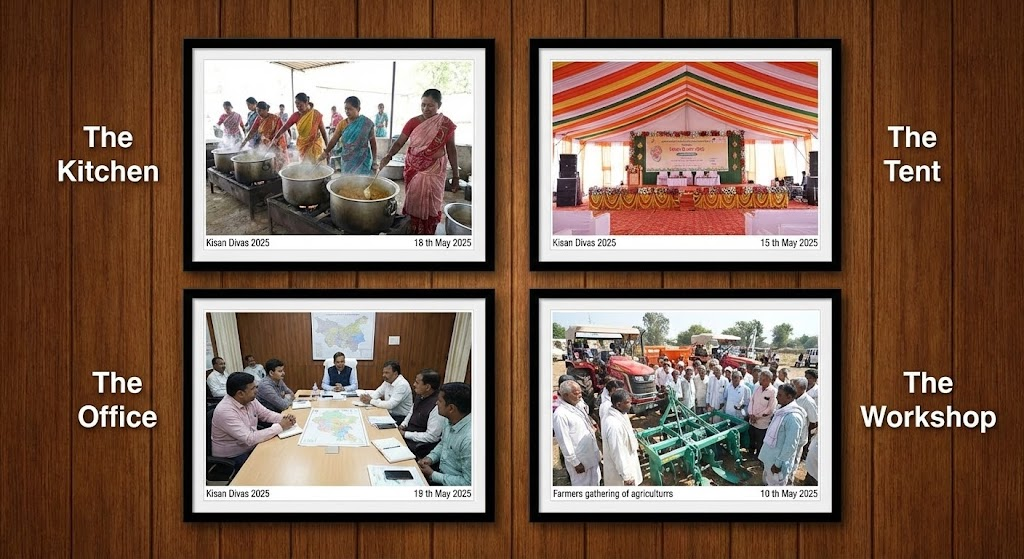
Across India, many groups are holding events to mark the day. These include government bodies, research institutes, agricultural colleges, NGOs, and community groups.
At ICAR centres, Farmers’ Day events include talks on crop choices, demos of climate smart farming methods, and award ceremonies for farmers who use good practices and reach markets well. They also show new tools and better seeds to help farmers increase yield. (ICAR centres often hold such events.)
In Varanasi, the ICAR institute for vegetable research had training for farmers, youth and women. The training focused on better farming ways and job help under a rural livelihood program. This kind of training aims to give steady work and better income for village people. (Local reports covered these events.)
State governments ran local fairs, exhibitions and outreach drives. These camps teach farmers about better seeds, drip irrigation, organic farming and schemes that add to income. Industry groups held roundtables on how to add value to farm goods and how to export them. Cities like Lucknow, Bhopal and Bengaluru hosted these talks.
Experts say celebrations are good to honor farmers. They also want these events to lead to real talks between farmers and leaders to solve hard problems like loans, unstable market prices, climate change and labour shortages.
Why National Farmers Day Matters Now
Even as India grows, farming still supports almost half of the people directly or indirectly. Farming also keeps food supply steady and supports many rural jobs.
This year the day comes while farmers face big problems. Weather has become less predictable because of climate change. Input costs go up and down. There are also ongoing talks about farm laws and price guarantees. Farmers’ protests in recent years showed the demand for a stable return, better debt help, and more market choice. National Farmers Day 2025 is a chance to remember these needs and to push for solutions.
Voices From the Fields
Farmers across the country shared mixed views on progress.
In Punjab and Haryana, known for high production, farmers worry about falling water levels and rising debt, even though the area once had strong rural incomes. Many want better price protection.
In states like Madhya Pradesh and Chhattisgarh, small farmers feel hopeful about cooperatives and FPOs. These groups help them sell better and avoid middlemen.
Women farmers, especially in horticulture and dairy, welcomed programs that teach them processing and business skills. They play an important role in making farming more profitable.
Experts say these views show both the problems and the clear chances to improve farming.
Economic and Policy Perspectives
Economists point out that farming is more than crops. It supports many small industries, local trade, and whole supply chains. So helping agriculture is not only about more yield. It is about steady livelihoods, better markets, and more exports.
FPOs are important in this plan. They let small farmers pool resources. This lowers cost and raises profit. FPOs can also help farmers meet quality standards needed for exports.
Government moves such as better crop insurance, cheaper loans, improved storage, and better rural roads help farming too. As India plans for the future, farming will be part of the country’s big development steps.
Education, Awareness and Youth Engagement
Many agricultural colleges use Farmers Day to reach youth. They ask students to join agritech contests, field studies and farm startup ideas. This helps young people find careers in farming or related businesses.
Schools hold essay contests and community drives. These aim to teach children to respect farmers and understand why farming matters.
Challenges Ahead: Climate, Markets and Modernisation
Even with hope, many issues must be fixed.
Climate risk is a major worry. More heat waves, odd rains and droughts make yields unstable. The need is for better water systems and farming methods that can handle weather shocks.
Market access and stable prices stay central. Farmers need ways to sell without big losses to middlemen and to get fair prices.
Technology can help. Precision farming tools, digital platforms and mobile apps can link farmers to buyers. But farmers also need training and better internet access in villages.
Closing Reflections: From Recognition to Real Change
National Farmers Day 2025 is both a thank you and a call for action. By honouring farmers and Chaudhary Charan Singh’s work, India remembers that village life and farming are key to the nation’s growth.
As India works toward Vikasit Bharat 2047, farming must grow in a way that is fair, modern and green. If governments, communities and the private sector work together, farming can feed the nation and offer better lives for millions.
On this National Farmers Day, India’s message is clear. We thank the hands that feed the nation and we must build better paths for farmers now and for the next generations.