
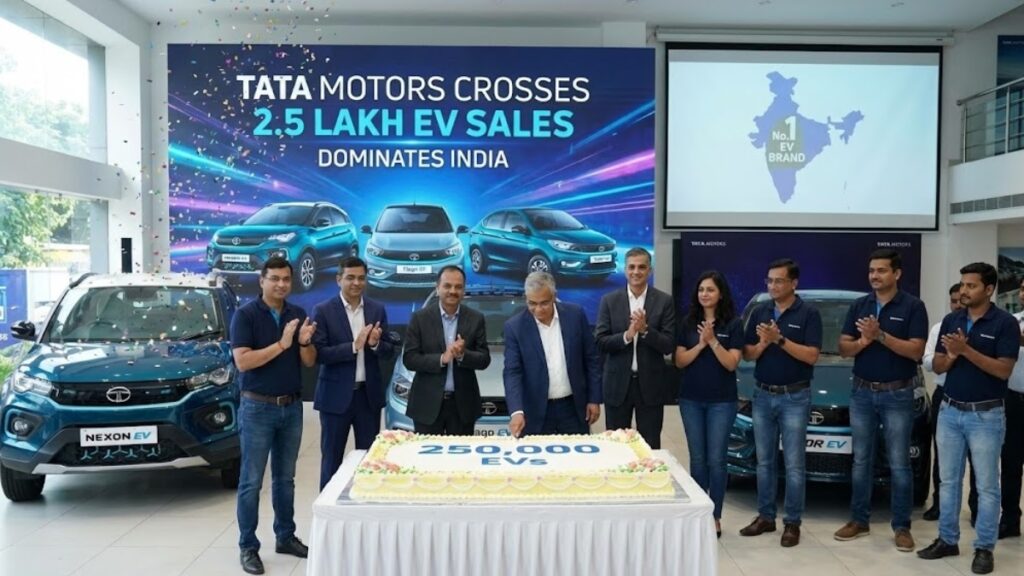
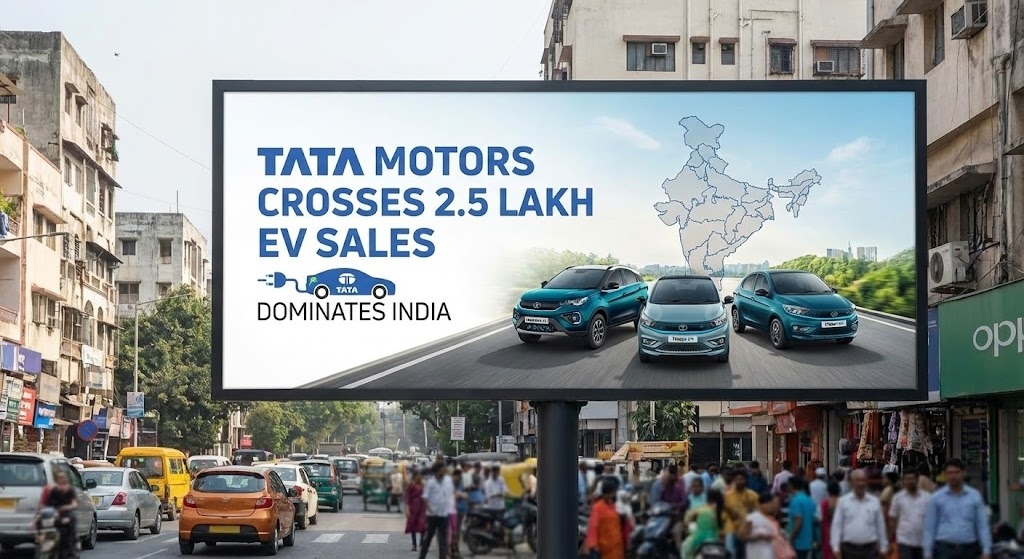
Mumbai, December 24, 2025: Tata Motors, India’s largest passenger vehicle manufacturer and dominant force in the electric vehicle (EV) market, announced on Tuesday that it has surpassed 2.5 lakh cumulative electric vehicle sales in the country. This landmark achievement reflects Tata’s leading role in driving India’s transition toward electric mobility and marks a pivotal moment in the evolution of the nation’s EV ecosystem.
The milestone comes nearly six years after Tata Motors launched its first mainstream electric vehicle, the Nexon.ev, which has since become a top seller and an EV success story in India. With this broad milestone, Tata now claims approximately 66 percent of the total EV passenger vehicle market in India, underscoring the company’s deep influence and early entry advantages in the rapidly growing segment.
The Journey to 250,000 EV Sales
Tata Motors began its modern electric vehicle push with the launch of the Nexon EV in 2020, shortly after global EV adoption began to accelerate. While early EV adoption in India was hindered by range anxiety, high prices and limited charging infrastructure, Tata steadily expanded its product lineup, introduced new features, and built an ecosystem to support owners.
The Nexon EV’s consistent performance has been a major driver of Tata’s success, as it has recently become India’s first electric car to cross 100,000 cumulative sales. This landmark also solidifies its position as the backbone of Tata’s EV portfolio and a cornerstone of mainstream EV demand.
Alongside the Nexon EV, Tata’s EV range includes models such as the Tiago EV, Punch EV, Harrier EV, and the XPRES-T EV aimed at fleet users. Together, this diversified lineup has helped Tata appeal to both private and commercial buyers across segments and price points, contributing to the 250,000-plus cumulative sales.
Dominance in a Growing Market
Tata’s commanding 66 percent market share in the Indian EV space underscores its strong position in a sector that has seen rapid growth in recent years. In practical terms, this means that two out of every three electric passenger cars sold in India today are from Tata Motors. Such a high share is rare in any major automotive market and highlights Tata’s comprehensive EV strategy.
This leadership position has been built on multiple factors:
Broad product portfolio: From affordable city EVs like the Tiago EV to larger SUVs like the Nexon EV and Harrier EV, Tata’s diverse range has catered to a wide array of buyers.
Early market entry: By launching EVs ahead of most competitors, Tata captured early brand loyalty and established significant retail reach across India.
Charging and after-sales network: Tata’s focus on charging infrastructure and service support has helped reduce common barriers to EV ownership, making electric vehicles more practical for urban and semi-urban buyers alike.
Customer Adoption Trends
The milestone sale figure of 2.5 lakh EVs is more than a corporate achievement — it reflects a broader shift in consumer behaviour. Tata says that many EV buyers now use their electric vehicles as primary daily drivers, a change from earlier adoption patterns where EVs were often second cars or urban commuters.
Real-world usage data has shown increasing confidence among owners, with many reporting long-distance travel and high annual mileage. Collectively, Tata EVs have accumulated billions of kilometres on Indian roads, highlighting how electric mobility is gradually moving from a niche to mainstream mainstream adoption.
Charging Ecosystem and Infrastructure
A critical part of Tata’s EV success has been its investment in charging infrastructure. Today, Tata’s ecosystem supports a wide array of charging points, including home chargers, public fast chargers and a growing network of mega charging hubs designed for long-distance travel.
Many of these chargers are part of an open collaboration initiative, which aims to expand the network further by partnering with other companies and local stakeholders. Tata has set ambitious targets, including:
- 400,000 charging points by 2027
- 1 million charging points by 2030
This strategy aims to ease range anxiety, a persistent challenge for EV adoption, by ensuring drivers have dependable access to charging on both urban routes and long highways.
Localisation and Self-Reliance
Another key pillar of Tata’s electric strategy has been localisation. More than half of the components used in Tata’s EVs are now manufactured domestically, including key high-voltage battery packs and battery management systems.
This localisation not only reduces costs but also strengthens supply chain resilience, an important factor for scaling production and keeping vehicle prices competitive. Tata’s plans include increasing local content in components like power electronics, wiring harnesses and thermal management systems, further deepening India’s EV manufacturing ecosystem.
Expanding Service Network and Customer Support
Tata has also invested in an extensive after-sales and service network to support the growing EV customer base. This network includes EV-dedicated service bays and trained technicians capable of handling advanced electric powertrain technologies.
This focus on service is crucial as the EV market expands beyond metropolitan centres. Tata now provides service support in over 1,000 towns and cities, ensuring EV owners have access to maintenance and repair facilities across India.
Future Roadmap: New EV Launches and Technologies
With the 2.5 lakh sales milestone achieved, Tata Motors is now shifting gears toward its next phase of electric expansion. The company has outlined an aggressive product roadmap for 2026 and beyond, with multiple new vehicles planned.
Upcoming launches include:
- Tata Sierra.ev: A midsize electric SUV expected to compete in a segment above the Nexon EV.
- New Punch.ev: A refreshed version of the popular compact EV.
- Avinya range: A premium luxury EV line launching by late 2026, aimed at buyers seeking more advanced technology and premium experiences.
Beyond these three core models, Tata plans to introduce five new EV models by FY2030, significantly expanding its portfolio and addressing more segments. This includes both passenger cars and potentially commercial electric offerings.
Strategic Investment and Ecosystem Development
To support this ambitious expansion, Tata Passenger Electric Mobility (TPEM) has planned substantial capital expenditure of Rs 16,000–18,000 crore through FY30 focused on new product development, technology enhancement, charging infrastructure and marketing.
Such investments aim not only to sustain Tata’s current leadership but also to build a comprehensive EV ecosystem in India — ranging from vehicle manufacturing and battery production to charging and service support infrastructures.
Environmental and Economic Impact
The wide adoption of EVs powered by Tata’s portfolio has significant environmental benefits. According to company estimates, Tata EVs have collectively driven over 12 billion kilometres across Indian roads, resulting in substantial reductions in carbon emissions and fuel consumption compared with internal combustion engine vehicles.
These environmental gains align with India’s broader goals of reducing greenhouse gas emissions and promoting cleaner transportation options across urban and rural regions. As EV adoption grows, the country continues to move toward a more sustainable mobility future with reduced dependence on fossil fuels.
Industry and Market Response
The automotive industry has taken note of Tata’s leadership. Analysts say Tata’s ability to capture a large share of EV sales with homegrown products demonstrates both manufacturing strength and market insight. Its early commitment to EVs has given it an edge over competitors who have entered the segment more recently.
However, the market is not static. Rivals such as MG, Mahindra & Mahindra and Hyundai are ramping up their EV offerings, increasing competitive pressure. Still, Tata’s head start, extensive portfolio and infrastructure initiatives provide a robust moat that competitors will need time and resources to match.
Consumer Confidence and Long-Term Adoption
Consumer confidence in EV technology continues to rise, driven by improved range, better charging networks and declining ownership costs. The 2.5 lakh sales mark signals that electric vehicles are no longer a niche choice in India — they are becoming a preferred alternative to traditional petrol and diesel cars for many buyers.
Tata’s efforts to build trust through reliable products, accessible finance options and ongoing service support have been instrumental in this shift, making EV ownership viable for a broader cross-section of Indian car buyers.
Conclusion: A Landmark Achievement and a Roadmap Ahead
Tata Motors’ achievement of 2.5 lakh electric vehicle sales in India is a clear testament to its leadership and strategic vision in the EV space. Beyond the numbers, it reflects a transformation in consumer behaviour, industry priorities and the pace of technological adoption in Indian automotive markets.
Looking forward, Tata’s expanding EV lineup, aggressive launch plans, and investments in infrastructure and technology will shape the next chapter of India’s EV journey. With strong momentum and a clear roadmap, Tata Motors is poised to continue driving electric mobility growth in India for years to come.